The Lazy Cat Learns a Lesson

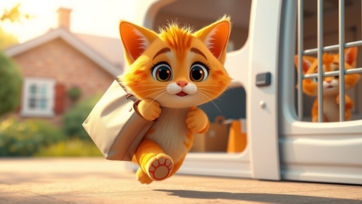
In a quiet village named Meadowville, there lived a fluffy cat named Milo. Milo was very lazy. He loved to sleep all day, eat tasty food, and avoid any kind of work. While other animals in the village played, collected food, and helped their friends, Milo spent his days napping under the sun.

This kids moral story teaches children the importance of hard work, responsibility, and not being lazy.


Milo’s Lazy Routine:

Every morning, Milo would yawn, stretch, and go back to sleep. He avoided helping his family or friends, and he often missed fun activities. Other animals, like the hardworking dog Benny and the busy squirrels, warned Milo, “You should work hard and be active, Milo!”

But Milo laughed, “Why work when I can sleep? Life is too short to be busy!”


The Big Storm Approaches:

One evening, dark clouds covered the sky. Strong winds blew through the village, and it began to rain heavily. All the animals worked quickly to secure their homes, gather food, and help each other.

Milo, as usual, stayed in his cozy corner, ignoring the warnings.


Milo Faces Trouble:

As the storm grew stronger, Milo’s house, made of straw, started to leak. Water poured in, and his food got soaked. Milo realized he had no way to protect himself because he had spent so much time being lazy.

He tried to fix things, but it was too late. Cold and wet, Milo shivered and felt scared.


Help from Friends:

The hardworking animals of the village noticed Milo’s trouble. Benny the dog said, “Come with me, Milo! We will help you.” The squirrels shared some of their food and guided him to a safe shelter.

Milo felt grateful but also ashamed. “I wasted so much time being lazy,” he thought. “If I had worked like others, I wouldn’t be in this mess.”


Learning the Value of Hard Work:

After the storm passed, Milo promised himself that he would change. He started waking up early, helping his friends, collecting food, and keeping his home clean. Soon, Milo became a responsible and active cat.

The villagers noticed his hard work and praised him. Milo realized that being lazy had only brought trouble, but hard work brought respect, safety, and happiness.


Why Hard Work Matters:

This story teaches children that:

  • Laziness can lead to problems

  • Hard work creates safety and comfort

  • Responsibility brings respect and trust

  • Being active helps you overcome challenges

True Success:

Success and happiness come to those who work diligently and take responsibility for their actions.


Moral of the Story:

The Lazy Cat Learns a Lesson shows that laziness causes trouble, but hard work, responsibility, and diligence lead to safety, happiness, and respect.


Why Kids Should Read This Story:

This children’s moral story helps kids:

  • Understand the dangers of laziness

  • Learn the value of hard work

  • Build responsibility and independence

  • Gain life lessons in a fun and engaging way

Parents and teachers can use this story as a bedtime tale or classroom lesson to teach kids the importance of diligence and effort.


Final Message:

🐱 Wake up, work hard, and help others — laziness may bring trouble, but effort brings happiness and respect. 🐱

Advertisement
Respect Everyone – Moral Story for Children
In a vibrant village called Harmony Town, there lived a curious boy named Aarav. Aarav was smart and playful, but sometimes he didn’t treat everyone with respect. He would tease younger children, ignore elders’ advice, and laugh at animals. This kids moral story teaches children the importance of respecting everyone — young or old, big or small — and how respect creates harmony and happiness. Aarav and the Village Elder: One sunny morning, Aarav was running through the village square when he bumped into Grandfather Ramesh, a wise elder. Instead of saying sorry, Aarav laughed and ran away. Grandfather Ramesh sighed and said, “Aarav, respecting everyone, even in small ways, shows a true heart.” Aarav shrugged, thinking he didn’t need to listen. The Lesson from the Lost Lamb: The next day, Aarav was walking near the meadow and saw a lost lamb crying. He wanted to play with it but ignored its bleating. The lamb wandered into the riverbank and got stuck. Aarav realized that if he hadn’t ignored the lamb, it wouldn’t have been in trouble. He quickly ran to help and saved it. Understanding Respect: He thought, “Respect is not just about people; it’s about caring for everyone, even animals.” Helping Friends and Neighbors: A few days later, the village organized a fair. Aarav noticed that his friend Meera was struggling to carry baskets of vegetables. Remembering the lamb, Aarav immediately offered help. “Thank you, Aarav!” Meera said happily. Aarav smiled, feeling proud and happy for helping. He realized respecting and helping others felt wonderful. Grandfather Ramesh’s Advice: That evening, Grandfather Ramesh called Aarav. “Do you see, Aarav? Respect and kindness make life better. When you respect everyone, people trust and love you.” Aarav nodded. “I understand now. I will respect everyone, no matter who they are.” Respect in Everyday Life: Aarav started to: Greet elders politely Listen carefully to friends Help animals and younger children Value everyone’s feelings Soon, Aarav became a role model in Harmony Town. Other children followed his example, and the village grew happier and more peaceful. Why Respect Matters: This story teaches children: Respect builds trust and love Treating everyone fairly creates harmony Small acts of respect can make big differences Respecting others also improves your own character True Wisdom: Respect is the foundation of friendship, trust, and happiness. Moral of the Story: Respect Everyone shows that kindness, humility, and respect bring happiness, trust, and strong relationships in life. Why Kids Should Read This Story: This children’s moral story helps kids: Understand the importance of respecting everyone Learn how small acts of kindness and respect matter Develop empathy, humility, and good behavior Apply respect in everyday life with family, friends, and community Parents and teachers can use this story as a bedtime tale or classroom moral lesson to teach children the value of respect. Final Message: 🌟 Always be kind, listen carefully, and respect everyone — it makes the world a happier place. 🌟
Learn About Trees and Plants
Trees and plants are vital to life on Earth. They provide oxygen, food, shelter, and beauty, and they play an essential role in the environment. Teaching children about trees and plants helps them appreciate nature, develop curiosity, and learn about science in a fun way. In this article, we will explore learn about trees and plants with interesting facts, activities, and simple explanations for kids. Why Learning About Trees and Plants Is Important for Kids: Understanding trees and plants helps children: Appreciate nature and the environment Learn how plants grow and survive Develop curiosity and observation skills Understand the importance of clean air and food Practice responsibility through gardening or plant care Learning about plants encourages a lifelong love for nature and science. Parts of a Plant and Their Functions: 1. Roots: Roots anchor the plant in the soil and absorb water and nutrients. 2. Stem: The stem supports the plant and carries water and nutrients between roots and leaves. 3. Leaves: Leaves make food for the plant through photosynthesis. 4. Flowers: Flowers help plants reproduce by making seeds. 5. Fruits and Seeds: Fruits protect seeds and help plants grow in new locations. Different Types of Trees and Plants: 1. Fruit Trees: Produce fruits like apples, oranges, and mangoes. 2. Flowering Plants: Produce colorful flowers like roses, sunflowers, and lilies. 3. Evergreen Trees: Keep their leaves all year round, like pine and cedar trees. 4. Deciduous Trees: Shed leaves in autumn, like oak and maple trees. 5. Herbs and Shrubs: Small plants like basil, mint, and hibiscus are used for cooking, medicine, or decoration. Fun Facts About Trees and Plants for Kids: Trees produce oxygen that we breathe. Some trees, like the baobab, live for thousands of years. Plants need sunlight, water, air, and soil to grow. Many plants provide food, medicine, and materials for humans. Bees and butterflies help flowers grow by pollination. Fun Activities to Learn About Trees and Plants: 1. Plant a Seed: Give children seeds to plant in soil and watch them grow. What Kids Learn: How plants grow and the importance of care and patience. 2. Leaf Collection and Identification: Collect different leaves and identify the types of trees they come from. What Kids Learn: Observation and classification skills. 3. Flower Observation: Study colors, shapes, and smells of different flowers. What Kids Learn: Appreciation of diversity in nature. 4. Gardening Together: Involve children in watering, weeding, and harvesting. What Kids Learn: Responsibility, teamwork, and the joy of growing plants. How Parents and Teachers Can Teach About Trees and Plants: Go on Nature Walks: Observe trees, flowers, and plants outdoors. Use Books and Videos: Show educational material about plant life. Encourage Questions: Let children ask and explore answers about nature. Provide Hands-On Experience: Gardening, planting, and caring for plants teach practical lessons. Discuss Environmental Importance: Teach children about clean air, conservation, and protecting plants. Benefits of Learning About Trees and Plants for Kids: Children who learn about trees and plants develop: Knowledge of science and biology basics Observation and analytical skills Appreciation for nature and the environment Responsibility and care for living things Curiosity and creativity through exploration Understanding plants connects children to the natural world and helps them grow into environmentally aware individuals. Conclusion: Learning about trees and plants is an exciting way to teach children about nature, science, and responsibility. Through hands-on activities, observation, and fun facts, kids can explore how plants grow, their importance, and the role they play in our lives. Encouraging children to care for plants helps develop curiosity, empathy, and a love for the environment that lasts a lifetime.
Courage and Bravery Lessons for Kids
Courage and bravery are essential values that help children face challenges, overcome fears, and try new things. Teaching kids these qualities empowers them to make confident decisions, stand up for themselves and others, and explore the world without fear. In this article, we will explore courage and bravery lessons for kids with simple explanations, stories, and fun activities. Why Courage and Bravery Are Important for Kids: Courage is not the absence of fear—it is taking action despite fear. Bravery helps children: Face challenges confidently Develop self-esteem and independence Stand up for themselves and others Take healthy risks in learning and play Build resilience and problem-solving skills Teaching these values early gives children a strong foundation for life. How Stories Teach Courage and Bravery: Stories are powerful tools for teaching courage because they: Show characters facing fears and challenges Demonstrate problem-solving in difficult situations Provide role models for children to emulate Make abstract concepts tangible and relatable Through stories, kids learn that courage and bravery are achievable and rewarding. Examples of Courage and Bravery Stories for Kids: 1. The Brave Little Firefighter: A young child helps rescue animals during a fire, showing that bravery is about helping others. Lesson Learned: Courage is standing up to help those in need. 2. Leo the Lion Cub: A timid lion cub overcomes fear of the dark to explore the forest. Lesson Learned: Facing fears builds confidence and strength. 3. The Girl Who Climbed the Tree: A story about a girl who climbs a tall tree to save a trapped kitten, learning that bravery often means taking action despite fear. Lesson Learned: True bravery is helping others and facing challenges. 4. The Explorer’s Journey: A child explorer ventures into the unknown, solving problems along the way. Lesson Learned: Courage helps in trying new experiences and learning from mistakes. Fun Activities to Teach Courage and Bravery: 1. Fear-Facing Challenges: Encourage children to try a small task they find scary, like speaking in front of the class or climbing a play structure. What Kids Learn: Taking small steps builds courage. 2. Role-Playing Brave Situations: Act out scenarios where children need to be brave, like helping a friend or asking for help. What Kids Learn: How to act courageously in real life. 3. Storytelling and Discussion: Read stories about brave characters and ask children what they would do in similar situations. What Kids Learn: Understanding and reflecting on courage. 4. Bravery Jar Activity: Create a jar where children place notes about brave actions they did each week. What Kids Learn: Recognizing and celebrating acts of courage. How Parents and Teachers Can Teach Courage: Model Bravery: Show children how you face challenges and fears. Encourage Independence: Let kids try tasks on their own with guidance. Praise Effort: Focus on the effort and bravery, not just the outcome. Discuss Real-Life Examples: Share stories of courageous people. Create Safe Challenges: Allow children to face fears in a safe environment. Guidance and encouragement help children develop courage naturally. Benefits of Learning Courage and Bravery for Children: Children who learn courage and bravery develop: Confidence and self-esteem Resilience in facing challenges Strong problem-solving and decision-making skills Empathy and willingness to help others Independence and readiness to explore new experiences Courage equips children with life skills that prepare them for school, friendships, and future challenges. Conclusion: Courage and bravery are essential qualities that every child should learn. Through stories, role-playing, and small challenges, children can understand how to face fears, act confidently, and help others. Teaching courage and bravery helps children grow into confident, resilient, and compassionate individuals who are ready to explore the world with confidence.
What Is Electricity? Basic Science for Kids
Have you ever wondered how lights turn on, how fans spin, or how your toys come alive? All of this happens because of electricity! This kids science story explains electricity in a simple and fun way, helping children understand the basics of this powerful force that powers our world. Electricity Is Energy: Electricity is a form of energy that moves through wires and powers machines, lights, and devices. It can flow from batteries, power plants, and even the Sun in some ways! Without electricity, many things we use every day — like lights, TVs, computers, and refrigerators — would not work. How Electricity Travels: Electricity travels in circuits, which are paths made of wires and devices. A simple circuit can be made with: A battery Wires A light bulb When connected properly, electricity flows through the wires and lights up the bulb. If the circuit is broken, the bulb won’t light up. This shows how electricity needs a complete path to work. Static Electricity – A Fun Spark: Have you ever rubbed a balloon on your hair and made it stick? Or felt a tiny shock when touching a doorknob? This is called static electricity. It happens when tiny electrical charges build up on surfaces. Though small, it is a fun way to see electricity in action. Safety with Electricity: Electricity is very useful but can also be dangerous. Kids should always: Never touch electrical sockets or wires Ask an adult for help with electric devices Stay away from water when using electricity Safety is very important to enjoy electricity without getting hurt. Fun Experiments to Explore Electricity: Kids can try safe experiments to learn about electricity: Make a simple circuit with a battery, wires, and a small bulb. Rub a balloon on your hair to see static electricity. Watch videos of electric experiments and learn about how power plants work. These activities make electricity exciting and educational. Why Electricity Is Important: Electricity powers our modern world: Lights, fans, and heaters Computers, phones, and TVs Schools, hospitals, and homes Learning about electricity helps children understand how the world works and sparks curiosity about science and technology. Moral of the Story: Electricity is a powerful energy that powers our world, but it must be used safely. Understanding it helps us use technology wisely and explore science. Why Kids Should Read This Story: This basic science story for kids helps children: Understand electricity in an easy way Learn about circuits, static electricity, and power Encourage curiosity and safe exploration Build a foundation for learning science and technology Parents and teachers can use this story as a classroom lesson or bedtime science tale. Final Message: ⚡ Electricity is everywhere — it lights our world and powers our devices. Learn about it, explore safely, and discover the magic of energy! ⚡
What Is Gravity? Simple Science for Kids
Have you ever wondered why when you jump, you always come back down? Or why apples fall from trees? This happens because of a magical force called gravity! This kids science story explains gravity in a simple and fun way, helping children understand one of the most important forces in the universe. Gravity Keeps Us on the Ground: Gravity is an invisible force that pulls objects toward each other. The most important gravity we feel every day comes from the Earth. It keeps our feet on the ground and stops us from floating into the sky! Imagine trying to walk, jump, or play without gravity — everything would float around, and it would be very hard to do normal things. Gravity and Falling Objects: If you drop a ball, it falls to the ground. Why? Because gravity pulls it down. Even water, books, and leaves fall because of gravity. This force is everywhere and works all the time, even when we cannot see it. Fun Fact: Sir Isaac Newton, a smart scientist, discovered gravity when he saw an apple fall from a tree. He realized the Earth was pulling the apple toward itself with a force — we now call it gravity! Gravity in Space: Gravity doesn’t only exist on Earth. Planets, stars, and moons also have gravity. The Earth pulls the Moon and keeps it circling around us. The Sun’s gravity keeps the planets, including Earth, moving around it. Without gravity, the Moon would drift away, and life on Earth would be very different. Gravity and Everyday Life: Gravity helps us in many ways: Walking and running: Keeps us on the ground Playing sports: Helps balls fall and bounce Water and rain: Pulls water down to Earth Keeping oceans in place: Stops water from floating into space Even though we cannot see gravity, we feel it all the time in our daily activities. Experiments to See Gravity: Kids can try simple experiments to understand gravity: Drop a ball from a chair and see it fall. Drop different objects like a pencil, apple, or leaf and notice how gravity pulls them down. Jump up and down and feel gravity pull you back to the ground. These experiments show that gravity works everywhere and affects everything, big or small. Why Gravity Is Important: Gravity is essential for life. Without it: Water would not stay in rivers and oceans Plants and trees couldn’t grow properly Animals and humans would float away The Earth and Moon would drift apart Gravity keeps our world balanced and safe. Moral of the Story: Gravity is a magical force that pulls objects together and keeps everything in place. Understanding gravity helps kids learn science in a fun and exciting way. Why Kids Should Read This Story: This simple science story for kids helps children: Learn about gravity in an easy-to-understand way Discover how science affects everyday life Encourage curiosity and experimentation Build a love for science and learning Parents and teachers can use this story to teach basic physics and science concepts in a fun and engaging way. Final Message: 🌍 Gravity is invisible, powerful, and everywhere — it keeps us safe, helps us move, and makes our world work perfectly! 🌍
Math Games to Improve Brain Power
Playing math games is a fun and effective way to boost brain power in children. Games make learning exciting, improve memory, strengthen problem-solving skills, and help kids enjoy math. With interactive activities and creative challenges, kids can develop logic, speed, and confidence in numbers! Why Math Games Are Important: Math games help children: Think logically: Solve puzzles and challenges. Improve memory: Remember numbers, patterns, and rules. Enhance problem-solving: Find solutions quickly and efficiently. Build confidence: Make math enjoyable and rewarding. Tip: Games make math feel like play, not work! Fun Math Games for Kids: Number Puzzle Race: Give children a puzzle with numbers in order (1–50 or 1–100). Mix the pieces and ask them to arrange numbers correctly. Brain Power Boost: Improves sequencing and memory. Addition & Subtraction Bingo: Create a bingo card with answers to simple addition or subtraction problems. Call out math problems; children mark correct answers. Brain Power Boost: Enhances quick calculation and attention. Math Hopscotch: Draw numbers on the ground in hopscotch style. Call out math problems and ask kids to hop to the right answer. Brain Power Boost: Combines physical activity with number recognition. Creative Math Games at Home: Number Hunt: Hide numbered cards around the house. Ask children to find them in order or solve small math challenges on each card. Brain Power Boost: Improves observation, memory, and sequencing. Memory Match Numbers: Use cards with numbers or simple equations. Flip cards and find matching pairs. Brain Power Boost: Strengthens memory and number recognition. Dice Games: Roll dice and perform addition, subtraction, or multiplication with the numbers shown. Create fun challenges like “Roll two dice, add the numbers, and collect points!” Brain Power Boost: Encourages fast thinking and mental math. Tips to Make Math Games More Effective: Short and Frequent: 10–15 minutes of play daily is enough. Use Real Objects: Toys, blocks, or candies make games more interactive. Reward Effort: Praise and small rewards motivate children to keep learning. Combine Physical Activity: Games with movement improve focus and retention. Story Example: Brainy Math Adventure: A group of friends found a treasure map with math challenges: Solve addition problems to cross the river. Solve subtraction puzzles to open the treasure box. By completing math games, they trained their brains and found the treasure! Lesson: Math games make learning fun, challenging, and rewarding. Conclusion: Math games are a powerful tool to improve brain power, problem-solving, and memory in children. With puzzles, bingo, hopscotch, and creative challenges, kids can learn numbers, addition, subtraction, and multiplication while having fun. Playing math games daily builds confidence, sharp thinking, and a love for learning!
How Does Water Change Shape? Simple Science for Kids
Have you ever poured water into a glass, a bowl, or a bottle and noticed it takes the shape of whatever container it’s in? Water is amazing because it can change its shape! This kids science story explains in a simple and fun way how water moves, flows, and changes shape, helping children understand the magic of liquids. Water Is a Liquid: Water is called a liquid, which means it can flow and take the shape of its container. Unlike solids, like ice or a rock, liquids don’t have a fixed shape. Pour water into a glass → it takes the shape of the glass Pour water into a bottle → it takes the shape of the bottle Pour water into a bowl → it spreads out and fills the bowl Water always adapts to its surroundings! The Three States of Water: Water can exist in three states: Solid (Ice): Water freezes and becomes hard. It has a fixed shape. Liquid (Water): Water flows and changes shape depending on its container. Gas (Steam or Water Vapor): Water evaporates and spreads in the air. These changes happen naturally, showing the flexibility and importance of water. Why Water Flows: Water molecules are tiny particles that move freely in liquid form. This allows water to flow easily and fill different shapes. When you tilt a cup, water moves to one side. When you pour it into a funnel, it flows through and comes out the other side. This is why water is used for drinking, cooking, cleaning, and watering plants. Fun Experiments to See Water Change Shape: Kids can try these simple experiments: Pour water into different containers like cups, bowls, and bottles to watch it change shape. Freeze water in an ice tray and see it become solid. Heat water carefully (with an adult) and see it turn into steam. These experiments show the amazing properties of water in a hands-on way. Why Understanding Water Is Important: Water is everywhere — in rivers, lakes, oceans, and even inside our bodies. Learning how water changes shape teaches children: How liquids behave differently from solids and gases The importance of water in daily life Observation and curiosity about natural science Water is essential for life, and understanding it helps us appreciate and take care of it. Moral of the Story: Water can change shape to fit its container, showing how flexible and important it is. Science helps us understand how nature works in magical ways. Why Kids Should Read This Story: This simple science story for kids helps children: Learn about the properties of water Understand liquids, solids, and gases Encourage curiosity and experiments Explore science in a fun and engaging way Parents and teachers can use this story as a classroom lesson or bedtime science tale. Final Message: 💧 Water is magical — it flows, it changes shape, and it helps life on Earth! Explore, experiment, and discover its wonders. 💧
Sharing Is Caring – A Short Moral Story
In a bright and happy town called Sunshine Ville, there lived a cheerful little girl named Lina. She was smart, playful, and loved her toys very much. Lina had colorful dolls, shiny pencils, storybooks, and delicious snacks, but there was one thing she did not like to do — sharing. This kids moral story teaches children an important life lesson about kindness, sharing, and caring for others. Lina and Her Favorite Toys: Lina spent most of her day playing alone in her room. Whenever her friends came to visit, she hid her toys and snacks. “Please let me play with your doll,” her friend Sara would ask politely. “No, it might break,” Lina would reply. Her mother often said, “Lina, sharing makes friendships stronger,” but Lina did not listen. A New Student at School: One day, a new boy named Aman joined Lina’s class. He was quiet and shy. He did not have many school supplies and often sat alone. During lunch break, Lina opened her lunchbox filled with tasty food. Aman sat nearby with only a plain sandwich. A Missed Chance: Aman looked at Lina’s food but did not ask for any. Lina noticed but quickly turned away. Her teacher, Miss Rose, watched everything carefully. The School Activity Day: A week later, the school announced a fun activity day. Children were asked to bring colors, books, and toys to share and play together. Lina brought her things but kept them inside her bag. Other children happily shared crayons, balls, and snacks. They laughed and played together. Lina sat quietly in a corner. When Lina Needed Help: Suddenly, Lina’s color box fell and broke. Her crayons scattered on the floor, and some broke into pieces. Lina felt sad and started to cry. She looked around, hoping someone would help her. Kind Hearts Respond: Sara came forward and said, “You can use my colors.” Another friend offered paper, and Aman quietly shared his pencils. Lina was surprised. “But I never shared with you,” she said softly. Aman smiled and replied, “Sharing makes everyone happy.” A Change of Heart: Lina felt ashamed. She realized that her friends were kind even when she was not. That evening, she spoke to her mother and said, “Ammi, I understand now. Sharing is caring.” Her mother hugged her and smiled proudly. Learning to Share at Home: The next day, Lina invited her friends home. She shared her toys, storybooks, and snacks. Everyone laughed, played, and enjoyed together. Lina noticed something special — she felt happier than ever before. Happiness Multiplies: The more Lina shared, the happier she felt inside. A Lesson at School: Miss Rose praised Lina in front of the class. “Children,” she said, “Lina has learned a beautiful lesson. Sharing does not reduce what we have; it increases love.” The children clapped, and Lina smiled with confidence. Why Sharing Is Important: Sharing helps children: Make good friends Learn kindness and empathy Build strong relationships Feel happy and loved True Meaning of Caring: Caring means thinking about others’ feelings and helping them when needed. Moral of the Story: Sharing is caring. When we share what we have, we spread happiness and love around us. Why Kids Should Read This Story: This children’s moral story teaches kids: The value of sharing The importance of kindness How small actions make a big difference Why helping others feels good Parents and teachers often use this bedtime story for kids to teach good manners and positive behavior. Final Thoughts: Sharing Is Caring is a simple but powerful moral story for children. It reminds us that toys, food, and happiness are better when shared. 💖 Share a little, care a lot, and watch your happiness grow. 💖