Fun Science Facts Every Kid Should Know

Science is all around us! From the tiniest bugs to the vast universe, there are countless amazing facts that make the world fun and exciting. Learning science doesn’t have to be boring — it can be magical and full of surprises.

This kids science story shares fun and interesting science facts that every child should know, sparking curiosity and love for learning.


Amazing Animal Facts

  1. Octopuses have three hearts and blue blood!

  2. A group of flamingos is called a “flamboyance.”

  3. Butterflies taste with their feet to find food.

  4. Sharks existed before trees on Earth.

Animals are full of surprises, and each one has unique features that make them special.


Interesting Space Facts

  1. The Sun is a star and is so big that one million Earths could fit inside it!

  2. Venus spins backward compared to other planets.

  3. Saturn’s rings are made of ice, rocks, and dust.

  4. A day on Jupiter lasts only 10 hours!

Space is full of wonders, and learning about planets and stars is like exploring a magical universe.


Cool Earth Facts

  1. Water covers 71% of Earth’s surface.

  2. Ants can lift 50 times their body weight.

  3. Lightning is hotter than the Sun’s surface.

  4. Rainbows are formed when sunlight passes through raindrops.

Our planet is amazing, with incredible animals, weather, and natural phenomena to discover.


Fun Physics and Chemistry Facts

  1. Bananas are naturally radioactive because they contain potassium.

  2. A single teaspoon of honey represents the work of 12 bees in their lifetime.

  3. Sound travels faster in water than in air.

  4. Magnets can pass through some metals without touching them.

Science is everywhere, even in the small things we see every day.


Simple Experiments to Try at Home

Kids can explore science hands-on with these simple experiments:

  1. Make a volcano with baking soda and vinegar.

  2. Grow a bean sprout in a jar to watch it grow.

  3. Float a paper boat in water and observe currents.

  4. Use a magnifying glass to look at tiny details in leaves, insects, or rocks.

These activities make science fun, interactive, and easy to understand.


Why Science Is Fun

Science helps children:

  • Understand how the world works

  • Encourage curiosity and exploration

  • Learn through observation and experiments

  • Discover exciting facts about animals, space, Earth, and more

The more kids explore science, the more they realize that learning can be fun and magical.


Moral of the Story

Science is everywhere, and fun facts make learning exciting. Curiosity, observation, and experimentation help children discover the wonders of the world.


Why Kids Should Read This Story

This fun science story for kids helps children:

  • Learn amazing facts about animals, space, Earth, and physics

  • Develop curiosity and critical thinking

  • Explore hands-on experiments

  • Enjoy science as a fun and exciting adventure

Parents and teachers can use this story as a bedtime tale or classroom lesson to encourage scientific curiosity.


Final Message

🔬 Science is full of surprises! Explore, ask questions, and have fun discovering the amazing facts about our world. 🔬


Advertisement
Learning English Words Through Fun Stories
Learning English words becomes easy and enjoyable when children learn them through fun stories. Stories capture a child’s attention, spark imagination, and help new words stay in memory for a long time. In this article, we will explore learning English words through fun stories in a simple, engaging, and child-friendly way. Why Learning English Through Stories Is Effective for Kids: Stories help children: Learn new English words naturally Improve listening and reading skills Understand word meanings through context Build confidence in speaking English Enjoy learning without pressure When learning feels like fun, children absorb language faster and more easily. How Fun Stories Help Kids Learn English Words: 1. Words Become Meaningful: Stories show how words are used in real situations, making them easier to understand and remember. 2. Repetition Improves Memory: Common words appear again and again in stories, helping children remember them naturally. 3. Imagination Boosts Learning: Characters, adventures, and emotions make words more interesting and memorable. 4. Listening and Reading Together: Kids can listen to stories or read along, improving pronunciation and comprehension. Types of Fun Stories to Teach English Words: 1. Animal Stories: Stories about animals teach basic English words like names, actions, and feelings. Example Words: run, jump, happy, sad, big, small 2. Fairy Tales: Fairy tales introduce descriptive words and simple sentences. Example Words: magic, castle, king, queen, brave 3. Daily Life Stories: Stories about school, home, or friends teach useful everyday English words. Example Words: book, school, food, play, help 4. Moral Stories: Short stories with lessons help kids learn values along with vocabulary. Example Words: kind, honest, share, care Fun Ways to Use Stories for Learning English Words: 1. Read Aloud Together: Parents or teachers read stories aloud while children listen and repeat new words. 2. Picture-Based Stories: Use storybooks with pictures so kids can connect words with images. 3. Act Out the Story: Children act like story characters and say simple English words. 4. Ask Simple Questions: After the story, ask questions using easy English words. Example: Who was happy? What did the cat do? Simple English Words Kids Can Learn From Stories: Daily Action Words: run, eat, sleep, play, read Feeling Words: happy, sad, angry, excited Object Words: book, ball, chair, apple Describing Words: big, small, fast, slow, colorful Stories naturally combine all these words in a meaningful way. Role of Parents and Teachers in Story Learning: Parents and teachers can help by: Choosing age-appropriate English stories Reading stories daily, even for 10 minutes Encouraging kids to repeat new words Praising effort instead of correcting too much Making storytelling a joyful routine A positive environment helps children learn without fear. Benefits of Learning English Words Through Fun Stories: Children who learn English through stories develop: Strong vocabulary and better pronunciation Improved listening and reading skills Confidence in speaking English Love for books and learning Better imagination and creativity Story-based learning builds both language skills and emotional intelligence. Conclusion: Learning English words through fun stories is one of the best ways to teach children a new language. With simple stories, colorful characters, and joyful reading, kids can build strong English vocabulary while enjoying the learning process. Making stories a daily habit helps children grow into confident, curious, and happy learners.
What Is Gravity? Simple Science for Kids
Have you ever wondered why when you jump, you always come back down? Or why apples fall from trees? This happens because of a magical force called gravity! This kids science story explains gravity in a simple and fun way, helping children understand one of the most important forces in the universe. Gravity Keeps Us on the Ground: Gravity is an invisible force that pulls objects toward each other. The most important gravity we feel every day comes from the Earth. It keeps our feet on the ground and stops us from floating into the sky! Imagine trying to walk, jump, or play without gravity — everything would float around, and it would be very hard to do normal things. Gravity and Falling Objects: If you drop a ball, it falls to the ground. Why? Because gravity pulls it down. Even water, books, and leaves fall because of gravity. This force is everywhere and works all the time, even when we cannot see it. Fun Fact: Sir Isaac Newton, a smart scientist, discovered gravity when he saw an apple fall from a tree. He realized the Earth was pulling the apple toward itself with a force — we now call it gravity! Gravity in Space: Gravity doesn’t only exist on Earth. Planets, stars, and moons also have gravity. The Earth pulls the Moon and keeps it circling around us. The Sun’s gravity keeps the planets, including Earth, moving around it. Without gravity, the Moon would drift away, and life on Earth would be very different. Gravity and Everyday Life: Gravity helps us in many ways: Walking and running: Keeps us on the ground Playing sports: Helps balls fall and bounce Water and rain: Pulls water down to Earth Keeping oceans in place: Stops water from floating into space Even though we cannot see gravity, we feel it all the time in our daily activities. Experiments to See Gravity: Kids can try simple experiments to understand gravity: Drop a ball from a chair and see it fall. Drop different objects like a pencil, apple, or leaf and notice how gravity pulls them down. Jump up and down and feel gravity pull you back to the ground. These experiments show that gravity works everywhere and affects everything, big or small. Why Gravity Is Important: Gravity is essential for life. Without it: Water would not stay in rivers and oceans Plants and trees couldn’t grow properly Animals and humans would float away The Earth and Moon would drift apart Gravity keeps our world balanced and safe. Moral of the Story: Gravity is a magical force that pulls objects together and keeps everything in place. Understanding gravity helps kids learn science in a fun and exciting way. Why Kids Should Read This Story: This simple science story for kids helps children: Learn about gravity in an easy-to-understand way Discover how science affects everyday life Encourage curiosity and experimentation Build a love for science and learning Parents and teachers can use this story to teach basic physics and science concepts in a fun and engaging way. Final Message: 🌍 Gravity is invisible, powerful, and everywhere — it keeps us safe, helps us move, and makes our world work perfectly! 🌍
Easy Chemistry Experiments for Beginners
Chemistry is the science that explains how different substances react, mix, and change. For beginners, chemistry can seem confusing, but with easy and safe experiments, learning becomes fun and exciting. Simple chemistry experiments help children and beginners understand basic concepts using everyday household items. In this article, we will explore easy chemistry experiments for beginners that are perfect for kids and anyone starting their science journey. Why Chemistry Experiments Are Good for Beginners: Chemistry experiments help beginners learn by observing real reactions instead of just reading about them. Chemistry experiments help beginners: Understand basic chemical reactions Improve observation and thinking skills Learn science through hands-on activities Build confidence and curiosity Enjoy learning in a fun way Starting with simple experiments creates a strong foundation for future science learning. Basic Chemistry Concepts Explained Simply: Before trying experiments, beginners should understand a few simple ideas. Chemical Reaction: A chemical reaction happens when substances mix and change into something new. Acids and Bases: Acids and bases are different types of substances that react with each other. Solids, Liquids, and Gases: Matter exists in three main forms, and chemistry helps us understand how they change. Safety in Chemistry: Using safe materials and adult supervision is very important for beginners. Easy and Safe Chemistry Experiments for Beginners at Home: 1. Baking Soda and Vinegar Reaction: Materials Needed:Baking soda, vinegar, cup How to Do It:Put baking soda into a cup and slowly add vinegar. What You Learn:This shows a chemical reaction that produces carbon dioxide gas, causing bubbles and fizzing. 2. Color-Changing Cabbage Water Experiment: Materials Needed:Red cabbage, hot water, cups, vinegar, baking soda How to Do It:Soak cabbage in hot water to make purple liquid. Add vinegar to one cup and baking soda to another. What You Learn:This experiment shows how acids and bases change color. 3. Dissolving Sugar in Water: Materials Needed:Water, sugar, spoon How to Do It:Add sugar to water and stir until it disappears. What You Learn:This teaches how substances dissolve to form solutions. 4. Homemade Fizzy Drink Experiment: Materials Needed:Water, baking soda, lemon juice How to Do It:Mix baking soda with lemon juice in water. What You Learn:Acids and bases react to produce gas, creating fizz. Fun Chemistry Experiments Using Household Items: 5. Invisible Ink Experiment: Materials Needed:Lemon juice, cotton swab, paper, heat source How to Do It:Write with lemon juice and heat the paper gently. What You Learn:Heat causes a chemical change, making the writing visible. 6. Growing Sugar Crystals: Materials Needed:Sugar, hot water, jar, string How to Do It:Dissolve sugar in hot water and let it cool slowly. What You Learn:This shows crystal formation and evaporation. 7. Mixing Oil and Water Experiment: Materials Needed:Oil, water, clear glass How to Do It:Mix oil and water and observe. What You Learn:Some liquids do not mix, showing different densities. Simple Chemistry Experiments That Teach Gas and Air: 8. Balloon Inflation Without Blowing: Materials Needed:Balloon, bottle, baking soda, vinegar How to Do It:Put baking soda in a balloon and vinegar in a bottle. Attach the balloon and let them mix. What You Learn:Gas produced in a reaction can inflate objects. 9. Floating Soap Bubbles Experiment: Materials Needed:Soap solution, straw How to Do It:Blow bubbles and observe how they float. What You Learn:This teaches about gases trapped inside liquids. Chemistry Experiments with Color and Change: 10. Magic Milk Experiment: Materials Needed:Milk, food coloring, dish soap How to Do It:Add soap to colored milk and watch patterns form. What You Learn:Soap reacts with fat molecules, showing chemical movement. 11. Rust Formation Experiment: Materials Needed:Iron nail, water How to Do It:Place the nail in water and wait a few days. What You Learn:This shows oxidation and chemical change over time. Safety Tips for Beginner Chemistry Experiments: Always have adult supervision Use only safe household items Never taste chemicals Wash hands after experiments Read instructions carefully Safety makes learning chemistry enjoyable and worry-free. How Parents and Teachers Can Help Beginners Learn Chemistry: Encourage Curiosity: Let beginners ask questions and explore. Explain Results Simply: Use easy words to explain what happened. Repeat Experiments: Repeating helps understanding and confidence. Connect to Daily Life: Explain how chemistry works in cooking, cleaning, and nature. What Beginners Learn from Chemistry Experiments: Through easy chemistry experiments, beginners learn: How substances react Why colors change How gases form Observation and thinking skills These experiments turn beginners into young scientists. Conclusion: Chemistry does not have to be difficult for beginners. With simple, safe, and fun experiments, anyone can learn basic chemistry concepts at home. These easy chemistry experiments for beginners help build curiosity, confidence, and a love for science. By learning through hands-on activities, beginners can enjoy chemistry and understand how it works in everyday life.
Learning Patience Through Fun Stories
Patience is an important life skill that helps children wait calmly, handle challenges, and make thoughtful decisions. Learning patience at a young age can improve self-control, reduce frustration, and build stronger relationships. One of the most enjoyable ways to teach kids patience is through stories. In this article, we will explore learning patience through fun stories for children and show how storytelling can make this valuable lesson memorable. Why Patience Is Important for Kids: Patience is more than just waiting—it’s about staying calm and positive while waiting for something or working toward a goal. Teaching patience helps children: Manage emotions and reduce tantrums Make thoughtful decisions instead of rushing Develop perseverance and determination Build stronger friendships and cooperation Learn to enjoy the process, not just the result Learning patience early sets the foundation for emotional intelligence and resilience. How Stories Teach Patience: Stories are powerful tools for teaching patience because they: Show consequences of impatience and rewards of patience Demonstrate characters facing challenges calmly Encourage reflection and discussion about feelings and actions Make abstract ideas understandable and relatable Through engaging tales, children can see patience in action and learn to apply it in their own lives. Examples of Fun Stories About Patience for Kids: 1. The Tortoise and the Hare: A classic fable where a slow and steady tortoise wins a race against a fast, impatient hare. Lesson Learned: Patience and persistence lead to success. 2. Little Seed’s Journey: A tiny seed learns to wait patiently through seasons before growing into a tall, strong tree. Lesson Learned: Good things take time and patience is rewarded. 3. Mia’s Waiting Game: A story about a girl who wants a new toy but learns to wait and enjoy small moments, discovering that patience makes the reward even sweeter. Lesson Learned: Waiting calmly can bring greater satisfaction. 4. The Artist’s Painting: A young boy learns that creating a beautiful painting requires patience, practice, and attention to detail. Lesson Learned: Patience improves skill and helps achieve goals. Activities to Reinforce Patience Lessons: 1. Patience Jar Activity: Create a jar where children place coins or stickers each time they wait calmly. What Kids Learn: Rewarding patience strengthens self-control. 2. Plant Growing Project: Grow a plant from seed and watch it grow over weeks. What Kids Learn: Waiting patiently brings real rewards. 3. Story Discussion: After reading a story about patience, ask children questions about how characters waited and how it felt. What Kids Learn: Reflection helps internalize patience as a value. 4. Puzzle or Board Games: Encourage children to complete puzzles or play turn-based games. What Kids Learn: Patience in waiting for their turn or finishing tasks. How Parents and Teachers Can Teach Patience: Model Patience: Children imitate adults, so demonstrate calmness in waiting. Set Small Challenges: Encourage kids to wait for short periods and gradually increase time. Praise Effort: Acknowledge when children show patience, even in small ways. Use Stories and Examples: Relate daily situations to lessons learned from stories. Encourage Mindfulness: Teach kids to focus on breathing or enjoy the moment while waiting. Consistent practice and guidance make patience a natural habit for children. Benefits of Learning Patience for Children: Children who practice patience develop: Better emotional control and reduced frustration Perseverance and persistence in completing tasks Improved problem-solving and decision-making skills Stronger relationships through empathy and cooperation Greater satisfaction and happiness in achieving goals Patience equips children with essential life skills for school, friendships, and personal growth. Conclusion: Learning patience is a valuable lesson that can be both fun and meaningful for children. Through engaging stories, activities, and real-life examples, kids can understand the importance of waiting calmly, practicing self-control, and enjoying the process. Teaching patience through stories helps children develop resilience, empathy, and thoughtful behavior, preparing them for a successful and balanced life.
What Are Even and Odd Numbers for Kids
Numbers are everywhere, and they can be even or odd. Learning the difference between even and odd numbers is an important math skill for children. It helps kids recognize patterns, organize numbers, and solve problems. With fun examples, activities, and games, understanding even and odd numbers can be easy and enjoyable. What Are Even Numbers: Even numbers are numbers that can be divided into two equal parts. Examples: 2, 4, 6, 8, 10, 12, 14… They can be split into pairs without anything left over. Even numbers usually end with 0, 2, 4, 6, or 8. Fun Example: Imagine 4 apples. If you share them equally between 2 friends, each gets 2 apples. That’s an even number! What Are Odd Numbers: Odd numbers are numbers that cannot be divided into two equal parts. Examples: 1, 3, 5, 7, 9, 11, 13… When you try to split an odd number into two equal parts, one will always be left out. Odd numbers usually end with 1, 3, 5, 7, or 9. Fun Example: Imagine 5 candies. If you try to share them between 2 friends, 1 candy will be left. That’s an odd number! Fun Ways to Learn Even and Odd Numbers: 1. Pairing Game: Take objects like blocks, toys, or coins. Try to make pairs. If all objects can be paired → Even number If one object is left → Odd number Example: 8 toy cars → all paired → Even 7 toy cars → one left → Odd 2. Number Sorting Activity: Write numbers from 1 to 20 on cards. Sort the numbers into even and odd groups. Activity Tip: Color even numbers blue and odd numbers red to make learning fun. 3. Hop on Even or Odd: Draw numbers on the floor using chalk or paper. Ask children to hop on even numbers or jump on odd numbers. Lesson: This helps with number recognition and physical activity. 4. Story Example: The Candy Party: Lily had 12 candies. She wanted to share with her friends. She paired the candies: 2 for each friend → all candies shared evenly → Even number Her brother had 7 candies. He tried to share equally → 1 candy left → Odd number Lesson: Even numbers can be shared easily, while odd numbers leave one out. Interesting Patterns in Even and Odd Numbers: Even + Even = Even Odd + Odd = Even Even + Odd = Odd Fun Example: 2 + 4 = 6 → Even + Even = Even 3 + 5 = 8 → Odd + Odd = Even 2 + 3 = 5 → Even + Odd = Odd These patterns make adding numbers easier for kids. Interactive Games for Even and Odd Numbers: Even-Odd Sorting: Give children objects or cards and sort them into even and odd piles. Number Hop Game: Draw numbers 1–20 and jump on even or odd numbers. Pairing Challenge: Give 1–20 objects and ask children to pair them to check if they are even or odd. Story Challenges: Create small stories with numbers and ask, “Is it even or odd?” Tips to Learn Even and Odd Numbers Quickly: Observe Last Digit: Look at the last digit to decide even or odd. Use Objects: Count toys, fruits, or pencils in pairs. Practice Patterns: Remember that even + even = even, odd + odd = even, etc. Make it Fun: Use games, songs, and stories to engage children. Conclusion: Learning even and odd numbers is a fun and essential math skill for kids. By pairing objects, sorting numbers, playing hop games, and using stories, children can quickly identify even and odd numbers. These skills also help in addition, subtraction, and real-life problem-solving. Even and odd numbers are everywhere, and understanding them makes math exciting and enjoyable.
How Computers Work: Simple Guide for Kids
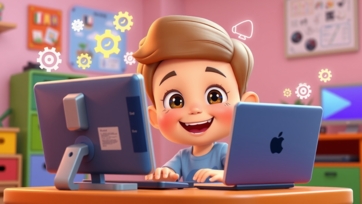
Computers are everywhere—from schools and homes to hospitals and space stations. Understanding how computers work can seem complicated, but with a simple guide, kids can learn the basics in a fun and engaging way. Learning about computers helps children develop problem-solving skills, logical thinking, and curiosity about technology. Why Kids Should Learn About Computers: Computers play an essential role in modern life. Learning how computers work helps children understand the world around them, improve digital literacy, and prepare for a future in technology. Kids who understand computers are better equipped to solve problems, code, and explore new creative ideas. The Role of Parents and Educators: Parents and teachers can make computer learning fun by using visual aids, hands-on activities, and kid-friendly explanations. Encouraging children to ask questions and explore safely builds confidence and enhances understanding of complex concepts. Basic Parts of a Computer: A computer has many components that work together to perform tasks. Understanding the main parts is the first step in learning how computers work. Central Processing Unit (CPU): The CPU is the brain of the computer. It processes instructions, performs calculations, and tells other parts of the computer what to do. Kids can think of it as the boss who manages everything inside the computer. Memory (RAM and Storage): RAM (Random Access Memory): Temporary memory that stores information while the computer is running. Storage (Hard Drive or SSD): Permanent memory where files, programs, and games are saved. Input Devices: Input devices let kids communicate with the computer. Examples include: Keyboard for typing Mouse for clicking and selecting Touchscreen for tapping and swiping Output Devices: Output devices show the results of the computer’s work. Examples include: Monitor for displaying images and videos Printer for producing physical copies Speakers for sound How Computers Process Information: Computers follow a simple cycle called Input → Process → Output: Input: The user gives commands or information through input devices. Process: The CPU processes the data using memory and instructions from programs. Output: The computer displays the result through output devices. This cycle happens millions of times per second, allowing computers to run games, apps, and websites instantly. Software vs. Hardware: Hardware: The physical parts of the computer like the CPU, monitor, and keyboard. Software: The programs and apps that tell the hardware what to do, such as games, learning apps, and web browsers. Understanding both hardware and software helps kids see how computers operate as a complete system. Simple Coding and Commands for Kids: Coding is like giving instructions to the computer. Learning simple coding helps children understand how computers work and how to control them. Platforms like Scratch and Blockly make coding fun and interactive for beginners. Fun Computer Activities for Kids: Build a Paper Computer Model: Kids can draw and label computer parts. Keyboard Games: Typing games improve familiarity with input devices. Coding Puzzles: Solve basic coding challenges using visual programming apps. Computer Exploration: Identify the parts of a real computer and explain what each part does. How Computers Affect Our Daily Lives: Computers help in education, entertainment, communication, and creativity. Kids use computers to play educational games, watch learning videos, draw digitally, and explore science projects. Understanding computers helps children use technology safely and responsibly. Internet Safety Tips for Kids: While learning about computers, it’s important to teach kids how to stay safe online: Never share personal information. Only visit trusted websites and apps. Ask parents for help if they encounter something confusing or scary. Use strong passwords with adult guidance. Benefits of Learning Computers Early: Improves problem-solving and logical thinking skills. Builds confidence in using technology. Encourages creativity through digital tools and apps. Prepares children for future learning and STEM careers. Helps children understand the digital world around them. Conclusion: Learning how computers work doesn’t have to be complicated for kids. By understanding the basic parts, processes, and coding concepts, children can explore technology confidently and safely. Parents and educators can make computer learning fun through hands-on activities, interactive apps, and real-life examples. Early exposure to computers inspires curiosity, creativity, and prepares kids for a digital future.
Healthy Eating Habits for Kids
Teaching kids healthy eating habits is essential for their growth, energy, and overall well-being. Good nutrition helps children develop strong bones, a healthy immune system, and the ability to focus in school. Introducing healthy foods and making mealtime fun encourages lifelong positive habits. Why Healthy Eating is Important for Kids: Healthy eating provides essential nutrients, vitamins, and minerals for physical and mental development. Kids who eat a balanced diet have more energy, better concentration, and stronger immunity. Early exposure to fruits, vegetables, whole grains, and proteins builds a foundation for healthy eating patterns that last a lifetime. The Role of Parents and Caregivers: Parents are role models when it comes to food choices. Children imitate adult behaviors, so eating nutritious meals and involving kids in meal preparation encourages healthy habits. Caregivers can make mealtime enjoyable and educational by discussing the benefits of different foods. Essential Nutrients for Growing Kids: Children need a variety of nutrients to grow properly and stay healthy. Proteins: Proteins help build muscles, repair tissues, and support growth. Good sources include eggs, beans, fish, chicken, and dairy products. Fruits and Vegetables: Fruits and vegetables provide vitamins, minerals, and fiber. Encourage colorful plates with a mix of leafy greens, berries, carrots, and other seasonal produce. Whole Grains: Whole grains like oats, brown rice, and whole wheat bread provide energy and aid digestion. They keep children full and focused during the day. Dairy Products: Milk, cheese, and yogurt are rich in calcium and vitamin D, which are vital for strong bones and teeth. Tips for Encouraging Healthy Eating: Creating positive food habits in children requires creativity and patience. Make Meals Fun: Use colorful plates, cut fruits into shapes, and create fun food art. Visual appeal encourages children to try new foods. Involve Kids in Cooking: Children are more likely to eat healthy meals if they help prepare them. Simple tasks like washing vegetables or stirring ingredients make cooking exciting and educational. Set a Routine: Regular meal and snack times help children develop consistent eating habits. Avoid skipping meals or relying on junk food. Limit Sugary and Processed Foods: Reduce candy, chips, and soda. Offer healthier alternatives like fruit smoothies, nuts, or yogurt with honey. Healthy Snacks for Kids: Fresh fruits like apples, bananas, or berries Vegetable sticks with hummus Whole-grain crackers or granola bars Yogurt with nuts or seeds Teaching Kids About Portion Sizes: Children should learn to recognize appropriate portion sizes. Using smaller plates, explaining serving sizes, and encouraging mindful eating helps kids avoid overeating while appreciating different foods. Role of Hydration: Drinking enough water is just as important as eating healthy foods. Water supports digestion, maintains energy, and prevents dehydration. Limit sugary drinks and promote water, milk, or natural fruit juices. Making Healthy Choices at School: Kids spend a lot of time at school, so teaching them to make healthy choices outside home is essential. Encourage: Packing balanced lunches and snacks Choosing water over soda or juice boxes Eating fruits and vegetables first Sharing healthy food ideas with friends Benefits of Healthy Eating for Kids: Strong bones, teeth, and muscles Improved concentration and energy Healthy weight management Reduced risk of illnesses Positive lifelong eating habits Conclusion: Healthy eating habits for kids are crucial for growth, learning, and overall wellness. By offering balanced meals, involving children in cooking, and making food fun and educational, parents and caregivers can encourage children to develop positive eating habits. With consistent guidance, children learn to make healthy choices that benefit their body, mind, and future.
What Is Electricity? Basic Science for Kids
Have you ever wondered how lights turn on, how fans spin, or how your toys come alive? All of this happens because of electricity! This kids science story explains electricity in a simple and fun way, helping children understand the basics of this powerful force that powers our world. Electricity Is Energy: Electricity is a form of energy that moves through wires and powers machines, lights, and devices. It can flow from batteries, power plants, and even the Sun in some ways! Without electricity, many things we use every day — like lights, TVs, computers, and refrigerators — would not work. How Electricity Travels: Electricity travels in circuits, which are paths made of wires and devices. A simple circuit can be made with: A battery Wires A light bulb When connected properly, electricity flows through the wires and lights up the bulb. If the circuit is broken, the bulb won’t light up. This shows how electricity needs a complete path to work. Static Electricity – A Fun Spark: Have you ever rubbed a balloon on your hair and made it stick? Or felt a tiny shock when touching a doorknob? This is called static electricity. It happens when tiny electrical charges build up on surfaces. Though small, it is a fun way to see electricity in action. Safety with Electricity: Electricity is very useful but can also be dangerous. Kids should always: Never touch electrical sockets or wires Ask an adult for help with electric devices Stay away from water when using electricity Safety is very important to enjoy electricity without getting hurt. Fun Experiments to Explore Electricity: Kids can try safe experiments to learn about electricity: Make a simple circuit with a battery, wires, and a small bulb. Rub a balloon on your hair to see static electricity. Watch videos of electric experiments and learn about how power plants work. These activities make electricity exciting and educational. Why Electricity Is Important: Electricity powers our modern world: Lights, fans, and heaters Computers, phones, and TVs Schools, hospitals, and homes Learning about electricity helps children understand how the world works and sparks curiosity about science and technology. Moral of the Story: Electricity is a powerful energy that powers our world, but it must be used safely. Understanding it helps us use technology wisely and explore science. Why Kids Should Read This Story: This basic science story for kids helps children: Understand electricity in an easy way Learn about circuits, static electricity, and power Encourage curiosity and safe exploration Build a foundation for learning science and technology Parents and teachers can use this story as a classroom lesson or bedtime science tale. Final Message: ⚡ Electricity is everywhere — it lights our world and powers our devices. Learn about it, explore safely, and discover the magic of energy! ⚡