Always Speak the Truth – Kids Story

In a small, peaceful village called Brightville, there lived a cheerful boy named Kabir. Kabir loved to play, learn new things, and explore the village with his friends. But sometimes, when he made a mistake, he would try to hide it by telling a little lie.

This kids moral story teaches children why honesty is the best policy and how speaking the truth builds trust and respect.


Kabir and the Broken Vase:

One sunny afternoon, Kabir was playing with his ball inside his house. Suddenly, the ball hit a beautiful vase, and it fell to the floor, shattering into pieces. Kabir felt scared.

He thought, “If I tell my mother, she will be angry. Maybe I can hide it.”

He quickly tried to sweep up the pieces and put them away.


The Consequences of Lying:

When Kabir’s mother came home, she immediately noticed the vase was broken.

“Kabir, did you break this vase?” she asked.

Kabir shook his head and said, “No, I don’t know what happened.”

His mother looked sad but decided to check carefully. She found the scattered pieces hidden in the corner. Kabir felt guilty.

Feeling the Truth Inside:

Kabir realized that lying made him feel heavy and unhappy inside.


The Courage to Tell the Truth:

That evening, Kabir gathered courage and said to his mother, “Ammi, I’m sorry. I broke the vase while playing, and I tried to hide it.”

His mother hugged him gently. “Thank you for telling the truth, Kabir. Honesty is very important. Everyone makes mistakes, but telling the truth shows courage.”


Learning from Mistakes:

Kabir learned an important lesson that day. He understood that:

  • Telling lies may seem easy, but it causes guilt and trouble

  • Speaking the truth earns respect and trust

  • Mistakes are okay if you admit them honestly


Kabir Helps Others:

The next day, Kabir saw his friend Ali cheating in a small school game. Kabir reminded him gently, “Ali, always speak the truth. Cheating might seem fun, but honesty is better.”

Ali listened and returned the game to fair play. Kabir felt proud, knowing that being honest helped others too.


Why Honesty Matters:

This story teaches children:

  • Honesty builds trust with family and friends

  • Truthfulness creates confidence and respect

  • Lies may bring short-term relief but long-term problems

  • Being honest is always the brave and right choice

True Bravery:

Courage is not only about being strong but also about telling the truth even when it is difficult.


Moral of the Story:

Always Speak the Truth shows that honesty is a superpower. Truthfulness makes life better, relationships stronger, and hearts happier.


Why Kids Should Read This Story:

This children’s moral story helps kids:

  • Learn the importance of honesty

  • Understand the consequences of lying

  • Gain courage to admit mistakes

  • Develop strong moral values in everyday life

Parents and teachers can use this story as a bedtime tale or classroom lesson to encourage children to speak the truth.


Final Message:

💬 Always be honest, admit your mistakes, and remember — speaking the truth is the bravest and happiest choice you can make. 💬



Advertisement
Learn Counting 1 to 50 Quickly
Counting is one of the first math skills children learn. Knowing how to count from 1 to 50 helps kids with numbers, addition, subtraction, and understanding patterns. Learning counting can be fun and easy with games, songs, and creative activities. Why Counting is Important: Counting helps children recognize numbers. It builds the foundation for math skills like addition and subtraction. Counting improves memory, attention, and observation skills. It is useful in daily life, like counting toys, fruits, or steps. Step-by-Step Counting 1 to 50: Counting by Ones: Start with 1, 2, 3… up to 50. Practice slowly at first and then gradually increase speed. Fun Tip: Use fingers to count along. It helps children see and feel numbers. Group Counting: Divide numbers into groups of 10: 1–10 11–20 21–30 31–40 41–50 Fun Example: Use toys or fruits to make groups of 10. Count each group to understand numbers faster. Fun Activities to Learn Counting: 1. Number Line Hop: Draw a number line from 1 to 50 on the floor. Children hop from one number to the next while saying the numbers aloud. Helps with memory, coordination, and recognition. 2. Counting Objects: Collect toys, blocks, or stones. Ask children to count them in order from 1 to 50. Lesson: Numbers represent real objects. 3. Counting Songs: Sing counting songs from 1 to 50. Music makes learning fun and easier to remember. 4. Flashcards Game: Make number flashcards from 1 to 50. Shuffle them and ask children to arrange them in order. Great for visual memory and number recognition. Tips to Count Quickly: Practice Every Day: Counting daily helps children remember numbers faster. Use Fingers and Objects: This makes counting interactive and concrete. Break Into Groups: Counting in tens makes learning less overwhelming. Play Counting Games: Hide toys and ask children to find and count them. Story Example: Counting Adventure: Tommy the turtle wanted to collect 50 shiny pebbles for his collection. First, he counted 1–10 pebbles and placed them in a small basket. Then, he counted 11–20, then 21–30, until he reached 50. By counting in small groups, Tommy learned numbers faster and never got confused. Lesson: Breaking numbers into groups and practicing every day helps learn counting quickly. Fun Comparisons and Visual Tricks: Think of numbers like steps on a ladder. Each step is one number. Group numbers like rows of apples to understand counting patterns. Draw a number chart from 1 to 50 and color every ten numbers differently. Activity: Children can color numbers 1–10 red, 11–20 blue, 21–30 green, 31–40 yellow, and 41–50 purple. Interactive Games for Counting 1 to 50: Hopscotch Numbers: Draw 1–50 on hopscotch squares. Children jump while counting. Number Treasure Hunt: Hide cards with numbers 1–50 around the room. Ask children to find and arrange them. Counting Race: Line up objects and let children count them as fast as they can, checking accuracy. Count and Clap: Clap hands for each number while counting aloud. It improves memory and rhythm. Conclusion: Learning to count from 1 to 50 quickly is fun and easy with practice, games, and stories. By using fingers, objects, songs, and interactive activities, children can remember numbers and develop a strong foundation for math. Counting skills not only make learning numbers enjoyable but also prepare kids for addition, subtraction, and real-life math.
Learning Robots and AI in a Simple Way for Children
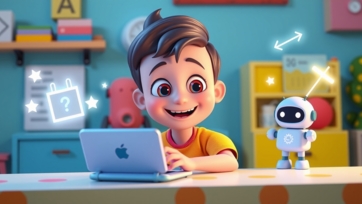
Introducing children to robots and artificial intelligence (AI) in a simple, fun way helps spark curiosity, creativity, and problem-solving skills. Learning about robots and AI doesn’t have to be complicated—children can explore these exciting technologies through games, interactive projects, and hands-on activities. Why Learning Robots and AI is Important for Kids: Robots and AI are becoming an integral part of daily life. Teaching children about these technologies early develops critical thinking, logical reasoning, and innovation. Kids who learn about robots and AI gain confidence, teamwork skills, and a foundation for future STEM education. The Role of Parents and Educators: Parents and teachers can make learning robots and AI enjoyable by using age-appropriate kits, coding apps, and storytelling. Encouraging experimentation, asking questions, and guiding children through simple projects makes learning interactive and memorable. Fun Ways Kids Can Learn About Robots and AI: There are many beginner-friendly ways for children to explore robots and AI concepts. Hands-on activities and games make abstract ideas easy to understand. Building Simple Robots: Kids can build simple robots using kits like LEGO Education, Dash & Dot, or other DIY robot sets. These activities teach mechanical skills, problem-solving, and basic programming concepts. Coding Robots: Coding platforms allow kids to control robot movements, lights, and sounds. Simple visual coding tools like Scratch, Blockly, or MakeCode help children understand how AI and robotics work in a fun, interactive way. AI-Powered Games and Apps: Children can learn AI concepts through interactive apps and games that teach pattern recognition, logic, and decision-making. These activities introduce AI in a safe, child-friendly environment. Using Storytelling to Teach AI: Stories about friendly robots and smart machines help kids understand AI in a relatable way. For example, tales of robots helping humans, solving problems, or exploring space teach problem-solving, creativity, and ethical thinking. Hands-On AI Projects for Kids: Voice Recognition Games: Use simple voice commands to control actions. Drawing or Painting Robots: Teach pattern recognition and creativity. AI Sorting Games: Introduce concepts of machine learning and categorization. Tips to Encourage Kids to Explore Robots and AI: Start Simple: Use basic robot kits or beginner-friendly apps. Make Learning Playful: Include games, competitions, and storytelling. Encourage Experimentation: Let kids try, make mistakes, and find solutions. Celebrate Achievements: Praise creative solutions and teamwork. Combine STEM Activities: Integrate math, coding, and science with robotics. Benefits of Early Learning Robots and AI: Early exposure to robotics and AI helps children develop analytical thinking, creativity, and collaboration skills. It also builds confidence in using technology, encourages problem-solving, and prepares children for a future in science, engineering, and AI-related fields. Conclusion: Learning robots and AI in a simple way for children combines fun, creativity, and education. By using interactive projects, coding, and storytelling, kids can explore advanced technology in an age-appropriate manner. Early exposure to robotics and AI inspires curiosity, innovation, and prepares children for a tech-driven future.
Fun Outdoor Activities for Kids
Outdoor activities are a fantastic way for children to stay active, explore nature, and develop physical, social, and mental skills. Fun outdoor activities encourage creativity, teamwork, and problem-solving while providing essential exercise. Spending time outside also promotes overall well-being and reduces screen time, making it an important part of every child’s routine. Why Outdoor Activities are Important for Kids: Outdoor play helps children grow stronger, improve coordination, and maintain a healthy weight. It also develops social skills, independence, and emotional resilience. Kids who spend time outside are more likely to focus better in school, sleep well at night, and develop a lifelong appreciation for nature. The Role of Parents and Caregivers: Parents and caregivers can encourage outdoor activities by creating a safe environment, joining in the fun, and suggesting engaging games. Modeling active behavior inspires children to explore, exercise, and interact with their surroundings. Physical Activities to Boost Fitness: Outdoor play keeps children physically active, strengthening muscles and bones while improving cardiovascular health. Running and Tag Games: Classic games like tag, relay races, and running challenges enhance speed, agility, and endurance. They also teach children about teamwork, strategy, and fair play. Cycling and Scootering: Riding bikes or scooters develops balance, coordination, and confidence. Encourage children to wear helmets and protective gear for safety. Jump Rope and Ball Games: Skipping ropes, playing catch, soccer, or basketball improves motor skills, hand-eye coordination, and teamwork. Ball games also teach children about cooperation, sharing, and following rules. Nature-Based Activities for Exploration: Exploring nature helps children learn about the environment and develop curiosity about plants, animals, and ecosystems. Nature Walks and Treasure Hunts: Take kids on walks to observe flowers, trees, insects, and birds. Organize scavenger hunts to make exploration fun while teaching observation skills. Gardening and Planting: Gardening teaches responsibility, patience, and care for living things. Kids can plant seeds, water plants, and watch them grow, learning about biology and the importance of nature. Outdoor Art Projects: Collect leaves, flowers, or stones to create natural art. Painting or drawing outside encourages creativity, observation, and imagination. Social and Team-Building Activities: Outdoor activities help children develop social skills and teamwork. Group Games and Challenges: Games like tug-of-war, obstacle courses, or relay races promote collaboration, communication, and problem-solving. Children learn to support teammates, take turns, and resolve conflicts. Picnic and Outdoor Storytime: Plan picnics with friends or family. Reading stories under a tree or sharing imaginative tales in a group encourages creativity, listening skills, and bonding. Safety Tips for Outdoor Activities: Safety is key to ensuring children enjoy outdoor play without accidents. Always supervise young children. Apply sunscreen to protect from sunburn. Use hats, comfortable clothing, and appropriate footwear. Ensure safe and child-friendly play areas. Keep a first-aid kit handy for minor injuries. Incorporating Learning into Outdoor Activities: Outdoor play can also be educational. Math and Counting: Count steps, leaves, or objects during walks. Science and Nature: Observe weather, insects, or plant growth. Language and Storytelling: Encourage children to narrate experiences, write poems, or create stories about their adventures. Benefits of Outdoor Activities for Kids: Improves physical fitness and motor skills. Enhances social skills, teamwork, and communication. Boosts creativity, imagination, and problem-solving. Strengthens emotional well-being and reduces stress. Encourages curiosity and lifelong learning about nature. Tips to Make Outdoor Activities More Fun: Rotate activities to keep children interested. Combine learning with play through games and exploration. Invite friends or siblings to encourage teamwork and social interaction. Use themed activities like nature hunts or obstacle courses. Celebrate achievements and participation to boost motivation. Conclusion: Fun outdoor activities for kids are more than just play—they are essential for physical, social, and emotional development. By incorporating running, games, nature exploration, creative projects, and social activities, children can stay active, learn new skills, and build confidence. Parents and caregivers can make outdoor time enjoyable, safe, and educational, helping kids develop healthy habits and a love for the natural world.
Fun Educational Apps for Kids
Educational apps for kids are a great way to combine learning and fun. In today’s digital world, children can explore new concepts, practice skills, and develop creativity through interactive apps. Fun educational apps make learning engaging, improve problem-solving abilities, and strengthen critical thinking, all while keeping children entertained. Why Educational Apps are Important for Kids: Educational apps provide children with opportunities to learn at their own pace. They enhance literacy, math, science, and social skills in a playful environment. Kids who use educational apps develop curiosity, attention span, and confidence in their abilities. These apps also complement traditional learning at school or home, making education more dynamic and interactive. The Role of Parents and Educators: Parents and teachers play an essential role in guiding children to use educational apps effectively. Setting time limits, choosing age-appropriate apps, and discussing the concepts learned can enhance the benefits. Active participation by adults ensures children use technology responsibly and learn valuable lessons. Categories of Fun Educational Apps: Educational apps come in many varieties. Different apps cater to different learning styles, age groups, and subjects. Math and Logic Apps: Math apps make numbers and problem-solving fun. Children can practice addition, subtraction, multiplication, and division through games, quizzes, and interactive challenges. Logic-based apps improve critical thinking, pattern recognition, and decision-making skills. Reading and Literacy Apps: Reading apps help children develop vocabulary, pronunciation, and comprehension skills. Storytelling apps allow kids to read or listen to stories, interact with characters, and complete reading challenges. These apps foster a love for books and language learning. Science and Exploration Apps: Science apps encourage curiosity about the natural world. Kids can explore planets, animals, plants, and experiments in a hands-on, interactive way. Apps with simulations, videos, and quizzes make learning complex concepts easier and more enjoyable. Creative and Arts Apps: Art, music, and creativity apps let kids express themselves freely. Children can draw, paint, create music, or design projects digitally. These apps help improve imagination, hand-eye coordination, and self-expression. Creative apps also promote relaxation and stress-free learning. Coding and STEM Apps: Coding apps introduce kids to programming in a fun way. Interactive platforms teach basic coding concepts through games, puzzles, and robot control. STEM (Science, Technology, Engineering, Math) apps help kids develop analytical thinking, problem-solving, and technological skills. Social and Emotional Learning Apps: Some educational apps focus on emotional intelligence, empathy, and social skills. Children learn to manage emotions, resolve conflicts, and understand feelings through interactive stories and games. Social-emotional learning apps are important for personal growth and positive relationships. How to Choose the Best Educational Apps for Kids: Selecting the right app is crucial to maximize learning benefits. Consider the following factors: Age Appropriateness: Ensure the app content matches the child’s age and developmental stage. Engaging Design: Look for apps with interactive visuals, animations, and fun challenges. Educational Value: The app should teach skills or concepts effectively while keeping the child engaged. User-Friendly Interface: Simple navigation allows children to use the app independently. Parental Controls: Apps with monitoring options ensure safe and responsible usage. Tips for Parents to Make App Learning Effective: Set Time Limits: Screen time should be balanced with physical play and offline activities. Participate Together: Explore apps with your child to encourage learning and interaction. Discuss Learnings: Ask questions about what your child learned and how they applied it. Combine with Real-Life Activities: Reinforce concepts from apps through hands-on experiments or outdoor exploration. Update Apps Regularly: Choose apps with frequent updates, new features, and improved content. Benefits of Educational Apps for Kids: Educational apps provide numerous advantages: Enhances cognitive development and critical thinking. Improves literacy, numeracy, and STEM skills. Encourages creativity and imagination. Builds independence and problem-solving abilities. Makes learning fun and engaging, reducing stress. Popular Educational Apps Recommended for Kids: Khan Academy Kids: Offers lessons in math, reading, and social-emotional learning. ABCmouse: A comprehensive learning app with interactive lessons for early learners. Duolingo ABC: Helps children develop reading skills with fun exercises. ScratchJr: Introduces coding concepts with interactive storytelling and games. Toca Boca Series: Creative apps focused on role-playing, arts, and imaginative play. BrainPOP Jr.: Covers science, math, and social studies through animated lessons. Conclusion: Fun educational apps for kids provide an exciting way to learn essential skills while enjoying playtime. When chosen carefully and used mindfully, these apps foster creativity, critical thinking, and problem-solving abilities. Parents and educators can maximize the benefits by guiding children, combining app learning with real-world experiences, and encouraging curiosity. Embracing technology responsibly helps children develop a love for learning that lasts a lifetime.
The Hardworking Ant Story
Once upon a time, in a green meadow, there lived a small but very hardworking ant named Andy. Andy loved to work every day, gathering food and building his little home. He was determined, patient, and smart, and all the other insects in the meadow admired him. Andy the Ant’s Daily Routine: Andy had a busy day ahead: He would collect tiny grains of food to store for the winter. He helped his fellow ants carry leaves and twigs to strengthen their nest. Every day, he reminded himself: “Hard work today makes life easier tomorrow!” Even when the sun was hot or the rain was pouring, Andy continued working tirelessly. The Lazy Grasshopper: One sunny morning, a lazy grasshopper named Greg hopped by and laughed at Andy: “Why do you work so hard, Andy? The sun is shining! Come and play with me instead!” Andy smiled and replied: “I like to play too, Greg, but if I don’t prepare today, I will have nothing to eat when winter comes.” The Hard Work Pays Off: As days passed, Andy collected many grains, seeds, and leaves. His nest became strong and full of food. Meanwhile, Greg enjoyed playing every day, singing and jumping around. When winter arrived, Andy had plenty of food, while Greg found himself cold and hungry. He went to Andy and asked for help. Andy shared his food but also taught Greg an important lesson: “Hard work today helps us live comfortably tomorrow. Playing is fun, but we must also prepare for the future.” Moral of the Story: Hard work always pays off. Prepare for the future. Balance work and play. Helping others is kind, but learning responsibility is important. This story teaches children the value of discipline, responsibility, and planning ahead. Fun Activities with the Story: 1. Ant Nest Craft: Use paper, leaves, and sticks to make a small ant nest. Children can pretend to gather food like Andy. 2. Story Role Play: Assign roles: Andy the ant, Greg the grasshopper, and other insects. Act out the story to understand hard work and planning. 3. Discussion Questions: Why did Andy work hard? What happened to Greg because he didn’t prepare? How can we balance work and play in our daily life? 4. Counting Game with Grains: Use grains, beans, or small objects and ask children to collect and count them, like Andy storing food. This teaches numbers, counting, and responsibility. Story Extension: Andy Teaches Others: Andy’s friends noticed how prepared he was. He began teaching other ants and insects how to gather food, store it safely, and build strong nests. Soon, the whole meadow became organized and prepared for winter, and everyone was happy and healthy. Lesson: Hardworking habits can inspire others to be responsible too. Tips for Kids to Learn from Andy: Set Small Daily Goals: Just like Andy collected a little each day. Be Consistent: Work a little every day, even when it’s hard. Plan Ahead: Think about what you need in the future. Help Others: Share your knowledge and resources with friends. Conclusion: The story of The Hardworking Ant teaches children about discipline, responsibility, and foresight. Andy’s example shows that consistent effort, patience, and planning can make life easier and happier. By acting out the story, doing fun activities, and discussing the moral, children learn important life lessons in an engaging way.
What Is Electricity? Basic Science for Kids
Have you ever wondered how lights turn on, how fans spin, or how your toys come alive? All of this happens because of electricity! This kids science story explains electricity in a simple and fun way, helping children understand the basics of this powerful force that powers our world. Electricity Is Energy: Electricity is a form of energy that moves through wires and powers machines, lights, and devices. It can flow from batteries, power plants, and even the Sun in some ways! Without electricity, many things we use every day — like lights, TVs, computers, and refrigerators — would not work. How Electricity Travels: Electricity travels in circuits, which are paths made of wires and devices. A simple circuit can be made with: A battery Wires A light bulb When connected properly, electricity flows through the wires and lights up the bulb. If the circuit is broken, the bulb won’t light up. This shows how electricity needs a complete path to work. Static Electricity – A Fun Spark: Have you ever rubbed a balloon on your hair and made it stick? Or felt a tiny shock when touching a doorknob? This is called static electricity. It happens when tiny electrical charges build up on surfaces. Though small, it is a fun way to see electricity in action. Safety with Electricity: Electricity is very useful but can also be dangerous. Kids should always: Never touch electrical sockets or wires Ask an adult for help with electric devices Stay away from water when using electricity Safety is very important to enjoy electricity without getting hurt. Fun Experiments to Explore Electricity: Kids can try safe experiments to learn about electricity: Make a simple circuit with a battery, wires, and a small bulb. Rub a balloon on your hair to see static electricity. Watch videos of electric experiments and learn about how power plants work. These activities make electricity exciting and educational. Why Electricity Is Important: Electricity powers our modern world: Lights, fans, and heaters Computers, phones, and TVs Schools, hospitals, and homes Learning about electricity helps children understand how the world works and sparks curiosity about science and technology. Moral of the Story: Electricity is a powerful energy that powers our world, but it must be used safely. Understanding it helps us use technology wisely and explore science. Why Kids Should Read This Story: This basic science story for kids helps children: Understand electricity in an easy way Learn about circuits, static electricity, and power Encourage curiosity and safe exploration Build a foundation for learning science and technology Parents and teachers can use this story as a classroom lesson or bedtime science tale. Final Message: ⚡ Electricity is everywhere — it lights our world and powers our devices. Learn about it, explore safely, and discover the magic of energy! ⚡
How Do Rainbows Form? Simple Science for Kids
Have you ever seen a beautiful rainbow in the sky and wondered how it appears? Rainbows are magical and colorful arcs that appear after rain when the sun shines. This kids science story explains how rainbows form in a simple and fun way, making it easy for children to understand the science behind this natural wonder. Sunlight and Rain: Rainbows happen when sunlight passes through rain droplets in the sky. Sunlight looks white, but it is made of many colors: red, orange, yellow, green, blue, indigo, and violet. When sunlight enters a raindrop, it bends, reflects, and splits into all these colors, creating a rainbow. This process is called refraction and reflection. The Colors of the Rainbow: A rainbow always has seven colors in the same order: Red Orange Yellow Green Blue Indigo Violet Each color bends slightly differently, which is why we see all the colors separated in the sky. Why Rainbows Are Arches: Rainbows are curved because of the shape of raindrops and the way sunlight bends inside them. If you were high up in the sky, like in an airplane, sometimes you could see a full circle rainbow! Fun Facts About Rainbows: Rainbows always appear opposite the sun. Sometimes, you can see double rainbows with a fainter second arc. Rainbows are made entirely of light, so you cannot touch or catch them. Animals like butterflies and birds can also see the colors of the rainbow, just like humans. Simple Experiment to Make a Rainbow: Kids can try this at home: Fill a glass with water and shine sunlight through it. Place a white paper behind the glass. Tilt the glass slowly and see a rainbow appear on the paper! This shows how sunlight bends and splits into colors, just like real rainbows. Why Rainbows Are Special: Rainbows teach children about: The science of light and colors How nature works in magical ways Observation and curiosity about the world The beauty and wonder of everyday science Rainbows remind us that science can be fun and colorful! Moral of the Story: Rainbows form when sunlight passes through raindrops, bending and splitting into beautiful colors. Understanding this shows the magic and science of nature. Why Kids Should Read This Story: This simple science story for kids helps children: Learn why rainbows appear after rain Understand light, colors, and refraction in a fun way Develop curiosity about natural phenomena Explore science through observation and experiments Parents and teachers can use this story as a fun educational lesson or a bedtime science story. Final Message: 🌈 Look for rainbows after the rain — sunlight and raindrops create nature’s most colorful magic! 🌈
Simple Science Experiments for Kids at Home
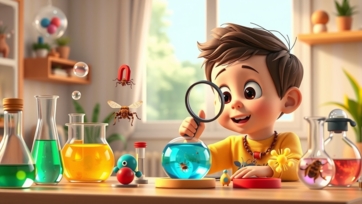
Science experiments are a fun and engaging way for children to explore the world around them. Simple science experiments at home help kids develop curiosity, problem-solving skills, and a love for learning. By using everyday household items, children can safely conduct experiments that teach important scientific concepts in an enjoyable way. Why Science Experiments are Important for Kids: Hands-on science activities help children understand abstract concepts, improve critical thinking, and encourage creativity. Experiments make learning interactive and memorable. Kids who explore science early gain confidence, curiosity, and an appreciation for observation, questioning, and experimentation. The Role of Parents and Educators: Parents and educators guide children through experiments, ensuring safety and fostering understanding. Demonstrating steps, asking questions, and encouraging predictions helps children think critically and make connections between theory and practice. Safety First: Tips for Home Science Experiments: Safety is essential when conducting experiments at home: Use non-toxic, household materials. Always supervise young children. Wear protective gear like gloves or goggles if needed. Keep a first-aid kit handy for minor accidents. Avoid sharp or dangerous chemicals. Simple Science Experiments for Kids: There are many fun experiments that can be done at home using everyday items. Volcano Eruption Experiment: Materials: Baking soda, vinegar, dish soap, food coloring, a small container.Steps: Place baking soda in the container. Add a few drops of food coloring and dish soap. Pour vinegar over the mixture.Observation: Kids see a colorful eruption and learn about chemical reactions. Rainbow in a Glass Experiment: Materials: Sugar, water, food coloring, a tall clear glass.Steps: Dissolve different amounts of sugar in water and add different food colors. Carefully layer the colored water in a glass, starting with the densest.Observation: Kids observe layers forming and learn about density. Floating and Sinking Objects: Materials: Various small household items (apple, coin, plastic toy, cork), water container.Steps: Fill a container with water. Drop objects in and observe whether they float or sink.Observation: Kids explore buoyancy and understand why some objects float while others sink. Magic Milk Experiment: Materials: Milk, food coloring, dish soap, cotton swab.Steps: Pour milk into a shallow dish. Add drops of food coloring. Dip a cotton swab in dish soap and touch the milk.Observation: Colors swirl magically, demonstrating chemical reactions and surface tension. How to Make Experiments More Educational: Ask Questions: Encourage kids to predict results and explain why things happen. Record Observations: Kids can write, draw, or take photos of their experiments. Connect to Real Life: Relate experiments to everyday phenomena like rain, cooking, or plants. Repeat and Modify: Trying experiments in different ways teaches persistence and deeper understanding. Using Experiments to Teach STEM Skills: Science experiments introduce children to STEM (Science, Technology, Engineering, Math) concepts: Observation Skills: Noticing details, patterns, and changes. Critical Thinking: Making predictions and analyzing results. Problem Solving: Adjusting variables to see different outcomes. Creativity: Designing experiments and thinking of new ideas. Fun Science Kits for Kids: For structured learning, parents can use science kits that provide materials and instructions. Popular kits include: Mini chemistry labs Crystal growing kits Simple robotics or engineering kits Plant growing kits These kits make experiments safe, organized, and educational while encouraging independent exploration. Benefits of Home Science Experiments for Kids: Encourages curiosity and love for learning. Develops problem-solving, observation, and critical thinking skills. Makes abstract science concepts tangible. Strengthens parent-child interaction and teamwork. Builds confidence through hands-on success. Conclusion: Simple science experiments for kids at home provide an exciting and educational way to explore the world. Using everyday items, children can learn about chemical reactions, physics, and biology while developing critical thinking and creativity. Parents and educators can enhance learning by guiding, encouraging questions, and connecting experiments to real-life experiences. Early exposure to hands-on science builds curiosity, problem-solving skills, and a lifelong love for STEM learning.