How Do Plants Grow? Easy Explanation

Have you ever planted a seed and watched it grow into a big plant or tree? Plants are amazing living things that start from tiny seeds and grow into flowers, fruits, or trees.

This kids science story explains how plants grow in a simple and fun way so that children can understand and enjoy learning about nature.


The Life of a Seed:

Every plant starts as a tiny seed. Seeds are like little treasure chests with everything the plant needs to start growing. When a seed is planted in the soil and gets water, it begins to sprout.

The tiny root grows downward into the soil to drink water and nutrients, and the shoot grows upward toward sunlight. This is the first step in a plant’s journey.


Sunlight, Water, and Soil:

Plants need three important things to grow:

  1. Sunlight: Plants use sunlight to make their food through a process called photosynthesis.

  2. Water: Water helps seeds sprout and plants grow strong.

  3. Soil: Soil gives plants nutrients and a place to anchor their roots.

Without any one of these, plants cannot grow properly. This shows how everything in nature works together.


Roots, Stem, and Leaves:

  • Roots: Hold the plant in the soil and absorb water and minerals.

  • Stem: Supports the plant and carries water and nutrients to leaves.

  • Leaves: Use sunlight to make food for the plant.

All parts of a plant work together, just like a team, to help it grow big and healthy.


Flowers and Fruits:

As the plant grows, it may produce flowers, which later turn into fruits with seeds inside. These seeds can grow into new plants, continuing the cycle of life.

This is why gardens, farms, and forests are so full of life — plants keep growing, spreading, and helping animals and humans.


Fun Experiments to Grow Plants:

Kids can try these simple experiments:

  1. Plant a seed in a small pot and water it daily.

  2. Place one pot in sunlight and another in darkness to see how sunlight helps plants grow.

  3. Measure the plant’s growth every day to watch it get taller.

These experiments help children learn and enjoy watching nature work.


Why Plants Are Important:

Plants are very important for life on Earth. They:

  • Provide oxygen for us to breathe

  • Give food for humans and animals

  • Offer shelter and beauty

  • Keep the environment healthy

Taking care of plants is a way to care for our planet.


Moral of the Story:

Plants grow with sunlight, water, soil, and care. By understanding how plants grow, children learn the importance of patience, nurturing, and respecting nature.


Why Kids Should Read This Story:

This easy science story for kids helps children:

  • Learn how plants grow step by step

  • Understand the importance of sunlight, water, and soil

  • Encourage curiosity and observation of nature

  • Develop respect for the environment

Parents and teachers can use this story as a fun educational lesson or a bedtime science story.


Final Message:

🌱 Plant seeds, water them, and watch the magic of nature — patience and care help plants grow big and strong! 🌱


Advertisement
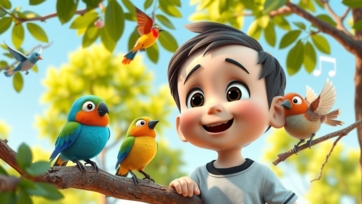
Birds and Their Sounds: A Kids’ Guide
Birds are fascinating creatures that come in many shapes, sizes, and colors. One of the most interesting things about birds is the variety of sounds they make. Teaching children about birds and their sounds helps them explore nature, develop listening skills, and learn about animal behavior. In this article, we will explore birds and their sounds: a kids’ guide with fun facts, examples, and activities. Why Learning About Birds and Their Sounds Is Important for Kids: Understanding birds and their sounds helps children: Connect with nature and wildlife Improve observation and listening skills Learn about animal communication and behavior Encourage curiosity and scientific thinking Develop appreciation for biodiversity Birds provide an exciting way to introduce children to the natural world. How Birds Communicate Through Sounds: Birds use sounds to: Attract a mate: Singing helps them find a partner. Mark territory: Calls warn other birds to stay away. Warn of danger: Alarm calls alert others to predators. Find family members: Young birds communicate with parents through calls. Learning these sounds teaches children about animal behavior and communication. Examples of Birds and Their Sounds: 1. Crows: Make “caw caw” sounds Often seen as intelligent and curious birds 2. Parrots: Can mimic human speech and other sounds Colorful and playful 3. Owls: Make “hoot hoot” sounds Usually active at night and known for their wisdom in stories 4. Sparrows: Chirp happily, making “cheep cheep” sounds Common and friendly birds 5. Peacocks: Make loud calls, especially during mating season Known for their beautiful tail feathers Fun Facts About Birds for Kids: Some birds can imitate sounds from their surroundings. Birds have different songs depending on their species and location. The fastest bird is the peregrine falcon. Birds use calls to stay connected with family or alert others of danger. Some birds migrate thousands of miles every year. Activities to Teach Kids About Birds and Their Sounds: 1. Bird Watching: Take children outside to observe birds and listen to their sounds. What Kids Learn: Observation, patience, and identification skills. 2. Sound Matching Game: Play recordings of bird sounds and ask kids to match them with pictures of birds. What Kids Learn: Listening skills and memory. 3. Drawing and Coloring Birds: Encourage children to draw birds they see or imagine, labeling their sounds. What Kids Learn: Creativity and recognition of different bird species. 4. DIY Bird Feeder: Make a simple bird feeder and observe which birds visit. What Kids Learn: Responsibility, care for wildlife, and observation. How Parents and Teachers Can Encourage Bird Learning: Provide books or videos about birds and their habitats Encourage nature walks and outdoor observation Ask questions about bird sounds and colors Involve children in safe wildlife activities, like feeding or photographing birds Make learning fun with games, songs, and storytelling about birds Benefits of Learning About Birds and Their Sounds for Kids: Children who learn about birds develop: Stronger observation and listening skills Curiosity and love for nature Understanding of animal behavior and habitats Emotional connection to wildlife Knowledge of biodiversity and environmental awareness Exploring birds and their sounds provides both education and entertainment for young minds. Conclusion: Learning about birds and their sounds is a fun and educational activity for children. By observing, listening, and engaging with nature, kids can explore how birds communicate, their unique features, and their habitats. Teaching children about birds encourages curiosity, empathy, and a lifelong appreciation for wildlife and the natural world.
Fun Educational Apps for Kids
Educational apps for kids are a great way to combine learning and fun. In today’s digital world, children can explore new concepts, practice skills, and develop creativity through interactive apps. Fun educational apps make learning engaging, improve problem-solving abilities, and strengthen critical thinking, all while keeping children entertained. Why Educational Apps are Important for Kids: Educational apps provide children with opportunities to learn at their own pace. They enhance literacy, math, science, and social skills in a playful environment. Kids who use educational apps develop curiosity, attention span, and confidence in their abilities. These apps also complement traditional learning at school or home, making education more dynamic and interactive. The Role of Parents and Educators: Parents and teachers play an essential role in guiding children to use educational apps effectively. Setting time limits, choosing age-appropriate apps, and discussing the concepts learned can enhance the benefits. Active participation by adults ensures children use technology responsibly and learn valuable lessons. Categories of Fun Educational Apps: Educational apps come in many varieties. Different apps cater to different learning styles, age groups, and subjects. Math and Logic Apps: Math apps make numbers and problem-solving fun. Children can practice addition, subtraction, multiplication, and division through games, quizzes, and interactive challenges. Logic-based apps improve critical thinking, pattern recognition, and decision-making skills. Reading and Literacy Apps: Reading apps help children develop vocabulary, pronunciation, and comprehension skills. Storytelling apps allow kids to read or listen to stories, interact with characters, and complete reading challenges. These apps foster a love for books and language learning. Science and Exploration Apps: Science apps encourage curiosity about the natural world. Kids can explore planets, animals, plants, and experiments in a hands-on, interactive way. Apps with simulations, videos, and quizzes make learning complex concepts easier and more enjoyable. Creative and Arts Apps: Art, music, and creativity apps let kids express themselves freely. Children can draw, paint, create music, or design projects digitally. These apps help improve imagination, hand-eye coordination, and self-expression. Creative apps also promote relaxation and stress-free learning. Coding and STEM Apps: Coding apps introduce kids to programming in a fun way. Interactive platforms teach basic coding concepts through games, puzzles, and robot control. STEM (Science, Technology, Engineering, Math) apps help kids develop analytical thinking, problem-solving, and technological skills. Social and Emotional Learning Apps: Some educational apps focus on emotional intelligence, empathy, and social skills. Children learn to manage emotions, resolve conflicts, and understand feelings through interactive stories and games. Social-emotional learning apps are important for personal growth and positive relationships. How to Choose the Best Educational Apps for Kids: Selecting the right app is crucial to maximize learning benefits. Consider the following factors: Age Appropriateness: Ensure the app content matches the child’s age and developmental stage. Engaging Design: Look for apps with interactive visuals, animations, and fun challenges. Educational Value: The app should teach skills or concepts effectively while keeping the child engaged. User-Friendly Interface: Simple navigation allows children to use the app independently. Parental Controls: Apps with monitoring options ensure safe and responsible usage. Tips for Parents to Make App Learning Effective: Set Time Limits: Screen time should be balanced with physical play and offline activities. Participate Together: Explore apps with your child to encourage learning and interaction. Discuss Learnings: Ask questions about what your child learned and how they applied it. Combine with Real-Life Activities: Reinforce concepts from apps through hands-on experiments or outdoor exploration. Update Apps Regularly: Choose apps with frequent updates, new features, and improved content. Benefits of Educational Apps for Kids: Educational apps provide numerous advantages: Enhances cognitive development and critical thinking. Improves literacy, numeracy, and STEM skills. Encourages creativity and imagination. Builds independence and problem-solving abilities. Makes learning fun and engaging, reducing stress. Popular Educational Apps Recommended for Kids: Khan Academy Kids: Offers lessons in math, reading, and social-emotional learning. ABCmouse: A comprehensive learning app with interactive lessons for early learners. Duolingo ABC: Helps children develop reading skills with fun exercises. ScratchJr: Introduces coding concepts with interactive storytelling and games. Toca Boca Series: Creative apps focused on role-playing, arts, and imaginative play. BrainPOP Jr.: Covers science, math, and social studies through animated lessons. Conclusion: Fun educational apps for kids provide an exciting way to learn essential skills while enjoying playtime. When chosen carefully and used mindfully, these apps foster creativity, critical thinking, and problem-solving abilities. Parents and educators can maximize the benefits by guiding children, combining app learning with real-world experiences, and encouraging curiosity. Embracing technology responsibly helps children develop a love for learning that lasts a lifetime.
The Honest Boy and the Magic Seed
Once upon a time, in a peaceful village surrounded by green fields and tall mountains, there lived a young boy named Ayaan. Ayaan was known by everyone as the most honest and kind-hearted child in the village. He always spoke the truth, helped others, and never tried to cheat anyone. Because of his good behavior, elders trusted him, and children loved to play with him. This is a heart-touching kids moral story that teaches the importance of honesty, truthfulness, and good values in a simple and magical way. A Poor but Honest Life: Ayaan lived with his mother in a small mud house. They were poor, but they were happy. His mother often told him, “Being honest is more valuable than gold.” Ayaan believed her words and followed them every day. One morning, while helping his mother in the garden, Ayaan said, “Ammi, I want to grow something special that can help our village.” His mother smiled and replied, “Good thoughts always bring good results.” The Arrival of the Mysterious Old Man: One sunny afternoon, a strange old man came to the village. He wore a long robe and carried a wooden stick. He gathered all the children and said, “I have magic seeds. Whoever grows the best plant from this seed will receive a great reward.” All the children became excited. The old man handed one seed to each child, including Ayaan. Before leaving, he warned them, “Do not cheat. The seed will grow only with honesty and care.” Planting the Magic Seed: Ayaan reached home and carefully planted the seed in a pot. He watered it every day and placed it under sunlight. Days passed, then weeks, but nothing grew. Ayaan kept waiting patiently. Other children in the village began to boast about their tall plants and colorful flowers. Ayaan felt sad but did not give up. He continued watering the soil with hope and honesty. The Temptation to Lie: One day, Ayaan’s friend Bilal showed him a big green plant. “Look, my seed is growing fast,” Bilal said proudly. Ayaan looked at his empty pot and felt worried. He thought, “What if I fail? Everyone will laugh at me.” For a moment, he thought about planting a different seed, but then he remembered his mother’s words. Choosing Truth Over Fear: Ayaan said to himself, “Even if nothing grows, I will tell the truth.” The Day of Judgment: The old man returned after one month. All the children gathered in the village square with their beautiful plants. Flowers of many colors filled the place. Ayaan stood quietly in a corner, holding his empty pot. People whispered and laughed, but Ayaan kept his head down. When the old man saw Ayaan, he smiled gently and asked, “Why is your pot empty, my child?” Ayaan replied honestly, “Sir, I took care of the seed every day, but nothing grew. I did not change the seed because you told us not to cheat.” The Magical Truth Revealed: The old man suddenly raised his stick and spoke loudly. “Listen everyone! The seeds I gave you were boiled. They could not grow.” Everyone was shocked. The Power of Honesty: The old man pointed at Ayaan and said, “This boy is the only honest one here. He did not lie or cheat. He is the true winner.” With a wave of his stick, Ayaan’s empty pot began to glow. Suddenly, a beautiful golden plant grew from it, shining brighter than the sun. The Reward for Being Honest: The old man revealed that he was a wise magician. He rewarded Ayaan with gold coins and magical seeds that could grow food for the whole village. Ayaan did not keep the reward for himself. He shared it with his neighbors and helped poor families. The village became happy and prosperous. A Lesson for All Children: From that day on, the villagers taught their children the story of The Honest Boy and the Magic Seed. Ayaan became a role model for kids. Why Honesty Matters: Honesty builds trust, respect, and strong character. Lies may give quick success, but honesty brings long-lasting happiness. Moral of the Story: Being honest is always the right choice, even when it is difficult. Truth may take time, but it always shines in the end. Why Kids Should Learn This Story: This children’s moral story helps kids understand: The value of honesty The importance of patience Why cheating is wrong How good behavior brings rewards Parents and teachers can use this SEO-friendly kids story to teach strong moral values in a fun and magical way. Final Thoughts: The Honest Boy and the Magic Seed is a perfect bedtime story for kids. It combines magic, life lessons, and inspiration. Every child should remember that honesty is a superpower that never fails. 🌱 Always choose truth, and your life will bloom like a magical garden. 🌱
Simple Exercises for Kids at Home
Regular exercise helps children stay healthy, active, and happy. Kids do not need gyms or special equipment to stay fit—simple exercises at home are enough to keep their bodies strong and energetic. In this article, we will learn about simple exercises for kids at home that are easy, fun, and safe to do every day. Why Exercise Is Important for Kids: Exercise helps children: Build strong muscles and bones Improve balance, flexibility, and coordination Maintain a healthy weight Boost mood and reduce stress Improve focus and learning ability Daily physical activity supports both physical and mental growth in children. Warm-Up Exercises for Kids: 1. Stretching Arms and Legs: Gently stretch arms, legs, and neck before starting. Stretching prepares the body and prevents injuries. 2. Jumping in Place: Jump slowly for 1–2 minutes. This helps warm up muscles and increase heart rate. Simple Exercises Kids Can Do at Home: 1. Jumping Jacks: Jump while spreading arms and legs, then return to the starting position. Benefits: Improves stamina and full-body movement. 2. Spot Running: Run in one place for 1–2 minutes. Benefits: Strengthens legs and improves heart health. 3. Squats: Bend knees slowly and stand back up. Benefits: Strengthens legs and improves balance. 4. Toe Touching: Bend forward and try to touch toes. Benefits: Improves flexibility and posture. 5. Wall Push-Ups: Push against a wall instead of the floor. Benefits: Strengthens arms and shoulders safely. Fun Exercises That Feel Like Games: 1. Animal Walks: Walk like a frog, bear, or crab. Kids enjoy pretending while exercising. 2. Dancing: Dance to favorite music for 10–15 minutes. Dancing keeps kids active and happy. 3. Balloon Keep-Up: Keep a balloon in the air using hands or feet. Improves coordination and focus. 4. Obstacle Course: Use pillows, chairs, or ropes to create a simple course. Encourages movement and problem-solving. How Parents Can Encourage Exercise at Home: Exercise Together: Kids love copying parents. Make a Routine: Fix a daily exercise time. Keep It Fun: Turn exercises into games or challenges. Limit Screen Time: Encourage movement instead of long screen use. Praise Effort: Appreciate participation, not perfection. Support and encouragement help children enjoy physical activity. How Much Exercise Do Kids Need Daily: At least 60 minutes of physical activity every day Mix of stretching, strength, and movement exercises Short breaks of activity throughout the day also help Regular movement keeps children energetic and healthy. Benefits of Exercising at Home for Kids: Children who exercise regularly develop: Strong and flexible bodies Better immunity and digestion Improved mood and confidence Healthy sleep patterns Positive lifelong fitness habits Exercise also helps reduce stress and improve emotional well-being. Conclusion: Simple exercises for kids at home are an easy and effective way to keep children healthy and active. With stretching, jumping, dancing, and fun games, kids can enjoy daily exercise without pressure. Encouraging regular physical activity helps children grow strong, confident, and full of energy, setting the foundation for a healthy future.
What Are Even and Odd Numbers
Learning about even and odd numbers is a fun way for children to explore math patterns, counting, and number sense. Even and odd numbers are everywhere—in toys, books, fruits, and games. Understanding them helps kids with math skills, problem-solving, and logical thinking. Why Learning Even and Odd Numbers is Important: Even and odd numbers are the foundation of many math concepts. Math patterns: Recognize number sequences and patterns. Problem-solving: Helps in counting, grouping, and dividing objects. Everyday life: Sharing toys, arranging items, or distributing candies. By learning even and odd numbers, kids develop confidence and logical thinking. What Are Even Numbers: Even numbers are numbers that can be divided into two equal parts without any remainder. Examples: 2, 4, 6, 8, 10… Fun Activities: Counting Objects: Take 6 apples and split them into 2 equal groups of 3 each. Hands-On Game: Use fingers to show pairs—each finger has a pair. Numbers with all paired fingers are even. Tip: All numbers ending with 0, 2, 4, 6, or 8 are even numbers. What Are Odd Numbers: Odd numbers are numbers that cannot be divided into two equal parts evenly. There is always one left over. Examples: 1, 3, 5, 7, 9… Fun Activities: Take 5 candies. Try to share equally with a friend. One candy will always be left. Use toys or blocks: group them in pairs and see which ones have one left. Tip: All numbers ending with 1, 3, 5, 7, or 9 are odd numbers. How to Identify Even and Odd Numbers: Look at the last digit: 0, 2, 4, 6, 8 → even; 1, 3, 5, 7, 9 → odd. Try pairing objects: If all objects can form pairs → even; if 1 object is left → odd. Use number line: Count numbers on a number line and notice the pattern: even, odd, even, odd… Fun Games to Learn Even and Odd Numbers: Even-Odd Hop: Draw numbers on the floor. Kids hop on even numbers with one foot and odd numbers with two feet. Sorting Objects: Collect buttons, pencils, or coins. Sort them into even and odd groups. Story Game: “There are 7 birds on a tree. 3 are paired and flying together, 1 is left alone. Is 7 even or odd?” This makes learning numbers fun and interactive. Story Example: Even and Odd in Daily Life: Lina had 10 balloons. She wanted to give the same number to her 2 friends. 10 ÷ 2 = 5 → Each friend gets 5 balloons. 10 is even. Then she bought 7 candies and wanted to share equally with a friend. 7 ÷ 2 = 3 with 1 left → 7 is odd. Lesson: Even and odd numbers help organize, share, and solve problems in daily life. Tips for Easy Learning: Practice Daily: Short exercises help kids remember even and odd numbers. Use Real Objects: Toys, fruits, and candies make learning practical. Play Games: Hop, sort, and story games make it fun. Use Visual Aids: Number lines, charts, and pairs help visualize numbers. Conclusion: Learning even and odd numbers is simple, fun, and full of interesting activities. With objects, games, and daily examples, children can easily identify, sort, and use even and odd numbers. Understanding these numbers lays the foundation for math patterns, problem-solving, and logical thinking. Even and odd numbers make counting exciting and meaningful for young learners!
The Lazy Cat Learns a Lesson
In a quiet village named Meadowville, there lived a fluffy cat named Milo. Milo was very lazy. He loved to sleep all day, eat tasty food, and avoid any kind of work. While other animals in the village played, collected food, and helped their friends, Milo spent his days napping under the sun. This kids moral story teaches children the importance of hard work, responsibility, and not being lazy. Milo’s Lazy Routine: Every morning, Milo would yawn, stretch, and go back to sleep. He avoided helping his family or friends, and he often missed fun activities. Other animals, like the hardworking dog Benny and the busy squirrels, warned Milo, “You should work hard and be active, Milo!” But Milo laughed, “Why work when I can sleep? Life is too short to be busy!” The Big Storm Approaches: One evening, dark clouds covered the sky. Strong winds blew through the village, and it began to rain heavily. All the animals worked quickly to secure their homes, gather food, and help each other. Milo, as usual, stayed in his cozy corner, ignoring the warnings. Milo Faces Trouble: As the storm grew stronger, Milo’s house, made of straw, started to leak. Water poured in, and his food got soaked. Milo realized he had no way to protect himself because he had spent so much time being lazy. He tried to fix things, but it was too late. Cold and wet, Milo shivered and felt scared. Help from Friends: The hardworking animals of the village noticed Milo’s trouble. Benny the dog said, “Come with me, Milo! We will help you.” The squirrels shared some of their food and guided him to a safe shelter. Milo felt grateful but also ashamed. “I wasted so much time being lazy,” he thought. “If I had worked like others, I wouldn’t be in this mess.” Learning the Value of Hard Work: After the storm passed, Milo promised himself that he would change. He started waking up early, helping his friends, collecting food, and keeping his home clean. Soon, Milo became a responsible and active cat. The villagers noticed his hard work and praised him. Milo realized that being lazy had only brought trouble, but hard work brought respect, safety, and happiness. Why Hard Work Matters: This story teaches children that: Laziness can lead to problems Hard work creates safety and comfort Responsibility brings respect and trust Being active helps you overcome challenges True Success: Success and happiness come to those who work diligently and take responsibility for their actions. Moral of the Story: The Lazy Cat Learns a Lesson shows that laziness causes trouble, but hard work, responsibility, and diligence lead to safety, happiness, and respect. Why Kids Should Read This Story: This children’s moral story helps kids: Understand the dangers of laziness Learn the value of hard work Build responsibility and independence Gain life lessons in a fun and engaging way Parents and teachers can use this story as a bedtime tale or classroom lesson to teach kids the importance of diligence and effort. Final Message: 🐱 Wake up, work hard, and help others — laziness may bring trouble, but effort brings happiness and respect. 🐱
Easy Craft Ideas for Kids at Home
Crafting is a fun and creative way for children to explore their imagination, develop fine motor skills, and express themselves. With simple materials found at home, kids can create amazing art projects while learning patience and problem-solving. In this article, we will explore easy craft ideas for kids at home that are fun, educational, and safe. Why Crafting Is Important for Kids: Craft activities help children: Boost creativity and imagination Improve hand-eye coordination and fine motor skills Learn colors, shapes, and patterns Develop patience, focus, and problem-solving skills Build confidence by completing projects Crafting is not only fun but also supports learning in an interactive way. Simple Craft Ideas for Kids at Home: 1. Paper Plate Animals: Use paper plates, colors, and cut-outs to make animals like lions, turtles, or birds. What Kids Learn: Shapes, colors, and creativity. 2. Handmade Greeting Cards: Make cards for family or friends using colored paper, stickers, and drawings. What Kids Learn: Expressing emotions and practicing writing. 3. Egg Carton Crafts: Transform egg cartons into flowers, caterpillars, or creative creatures. What Kids Learn: Recycling and imaginative thinking. 4. Popsicle Stick Creations: Create puppets, small houses, or picture frames using popsicle sticks and glue. What Kids Learn: Building skills and spatial awareness. 5. DIY Paper Masks: Make masks of animals or favorite characters using paper, colors, and elastic strings. What Kids Learn: Role-playing, art, and self-expression. Fun Craft Activities With Everyday Items: 1. Nature Crafts: Collect leaves, flowers, or twigs and make collages or prints. What Kids Learn: Observing nature and using it creatively. 2. Bottle Cap Art: Use old bottle caps to make jewelry, mosaics, or colorful patterns. What Kids Learn: Recycling and fine motor skills. 3. Cotton Ball Snowmen: Glue cotton balls on paper to create snowmen or clouds. What Kids Learn: Texture, shapes, and imaginative play. 4. Origami Fun: Fold paper to make simple animals, boats, or stars. What Kids Learn: Following instructions and patience. How Parents and Teachers Can Encourage Crafting: Provide Safe Materials: Use child-friendly scissors, glue, and colors. Set Up a Craft Station: Keep a space with accessible materials for creativity. Encourage Experimentation: Allow kids to try new ideas without fear of mistakes. Join in the Fun: Craft together to make it a bonding activity. Display Their Work: Celebrate achievements by showing their crafts at home or classroom. Supporting children in crafting nurtures creativity, confidence, and problem-solving skills. Benefits of Crafting for Kids: Children who engage in crafts at home develop: Fine motor skills and hand-eye coordination Creativity and imagination Focus, patience, and problem-solving skills Confidence and pride in completing projects Interest in art, learning, and self-expression Crafting provides a fun, educational, and therapeutic activity for children of all ages. Conclusion: Easy craft ideas for kids at home are perfect for nurturing creativity, learning new skills, and having fun with simple materials. By exploring craft projects, DIY activities, and imaginative creations, children can express themselves, develop fine motor skills, and enjoy productive screen-free time. Crafting encourages curiosity, confidence, and a lifelong love for creativity.
Fascinating Animal Facts Every Child Should Know
Animals are one of the most exciting topics for children. From tiny insects to giant elephants, the animal world is full of surprises. Learning about animals helps children understand nature, develop kindness toward living beings, and grow curiosity about the world around them. In this article, we will explore fascinating animal facts every child should know in a fun, simple, and educational way. Why Learning About Animals Is Important for Children: Animals help children learn many important life lessons. By studying animals, kids understand how different creatures live, survive, and interact with nature. Learning animal facts helps children: Build curiosity and observation skills Learn about nature and the environment Develop empathy and responsibility Improve memory and knowledge Enjoy learning through fun facts Animal knowledge also encourages children to protect wildlife and care for the planet. Amazing Facts About Mammals That Kids Love: Mammals are animals that usually have fur or hair and feed milk to their babies. Elephants Have Incredible Memories: Elephants can remember places and other elephants for many years. They are known to be very intelligent and emotional animals. Dolphins Are Very Smart: Dolphins can recognize themselves in mirrors and communicate using sounds. They are one of the smartest animals in the ocean. Bats Are the Only Flying Mammals: Bats are special because they can fly. They use echolocation to find food in the dark. Whales Are the Largest Animals on Earth: The blue whale is bigger than any dinosaur that ever lived. Its heart alone can be as big as a small car. Interesting Bird Facts That Will Surprise Children: Birds are animals with feathers and wings, and many of them can fly. Ostriches Are the Largest Birds: Ostriches cannot fly, but they can run very fast. They also lay the largest eggs in the world. Hummingbirds Can Fly Backward: Hummingbirds are tiny birds that can hover in the air and fly backward, which most birds cannot do. Owls Can Turn Their Heads Around: Owls can turn their heads almost all the way around because they have flexible necks. Penguins Are Birds That Swim: Penguins cannot fly, but they are excellent swimmers and live in very cold places. Reptile Facts That Make Kids Curious: Reptiles are cold-blooded animals with scales. Snakes Can Smell with Their Tongues: Snakes use their tongues to collect smells from the air and understand their surroundings. Turtles Carry Their Homes: A turtle’s shell protects it from danger and grows with the turtle as it gets older. Chameleons Change Color: Chameleons change color to communicate and control their body temperature, not just to hide. Cool Facts About Insects and Small Creatures: Even tiny animals can do amazing things. Ants Are Very Strong: Ants can lift objects many times heavier than their own body weight. Bees Help Make Our Food: Bees pollinate plants, which helps fruits and vegetables grow. Butterflies Taste with Their Feet: Butterflies use their feet to taste plants before laying eggs. Spiders Are Not Insects: Spiders have eight legs and belong to a different group called arachnids. Sea Animal Facts That Children Find Exciting: The ocean is home to many mysterious creatures. Octopuses Have Three Hearts: Two hearts pump blood to the gills, and one pumps it to the rest of the body. Sharks Have Been Around for Millions of Years: Sharks lived on Earth even before dinosaurs. Starfish Can Grow New Arms: If a starfish loses an arm, it can grow a new one over time. Seahorses Have a Unique Family Role: Male seahorses carry and give birth to babies. Fun Animal Behavior Facts for Kids: Dogs Can Understand Human Feelings: Dogs can sense emotions like happiness and sadness through voice and body language. Cats Sleep a Lot: Cats can sleep up to 16 hours a day to save energy. Monkeys Love to Play: Monkeys are playful animals and use games to learn and socialize. Animals With Special Survival Skills: Animals have unique abilities that help them survive. Camels Store Energy in Their Humps: Camels store fat in their humps, helping them survive in deserts. Frogs Can Breathe Through Their Skin: Frogs can absorb oxygen through their skin when underwater. Polar Bears Have Thick Fur and Fat: This helps them stay warm in freezing Arctic temperatures. How Animals Help Humans and Nature: Animals play an important role in our lives and the environment. Animals help by: Pollinating plants Keeping ecosystems balanced Providing companionship Teaching responsibility and care Understanding animals helps children respect and protect them. Simple Ways Children Can Learn More About Animals: Reading Animal Books: Picture books and fact books make learning fun. Watching Nature Programs: Documentaries help children see animals in their natural habitats. Visiting Zoos and Wildlife Parks: Seeing animals in real life makes learning memorable. Drawing and Craft Activities: Creative activities help kids remember animal facts. What Animal Facts Teach Children: By learning animal facts, children develop: Curiosity and love for nature Observation and thinking skills Respect for living beings Environmental awareness Animal education shapes kind and responsible future citizens. Conclusion: The animal world is full of wonders that amaze children and adults alike. From intelligent dolphins to tiny hardworking ants, every animal has something special to teach us. Learning fascinating animal facts every child should know makes education enjoyable, meaningful, and inspiring. By exploring animal life, children grow smarter, kinder, and more curious about the beautiful world they live in.