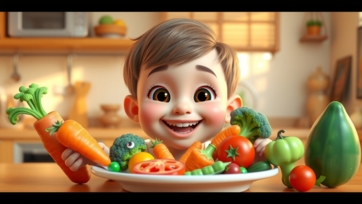
Stories About Sharing and Helping Friends

Teaching kids the values of sharing and helping others is an essential part of their social and emotional development. Through stories, children can learn empathy, cooperation, and the importance of friendship. Sharing and helping friends not only strengthens bonds but also encourages positive behavior in school and at home.

Why Sharing and Helping Friends is Important:

Sharing and helping friends promotes kindness, trust, and respect. Kids who practice these values learn to consider others’ feelings, work collaboratively, and handle conflicts peacefully. Early lessons in generosity and cooperation build a foundation for strong interpersonal skills later in life.

The Role of Parents and Educators:

Parents and teachers can model behaviors like sharing toys, assisting with tasks, and offering compliments. Reading stories, role-playing, and discussing real-life situations help children understand the benefits of helping and sharing.

Popular Story Themes for Kids:

Stories that focus on sharing and helping friends often involve situations children can relate to, making lessons memorable. Common themes include:

Sharing Toys and Belongings:

Stories about sharing toys teach children that giving to others does not reduce their own happiness. For example, a tale about a child lending a favorite toy to a friend demonstrates patience, generosity, and joy in helping others.

Helping in Difficult Situations:

Stories about helping friends during challenging times show children the importance of empathy and compassion. For instance, a story where a friend falls while playing and another helps them up teaches care, support, and emotional intelligence.

Working Together to Solve Problems:

Collaboration stories encourage teamwork and problem-solving. When characters in a story work together to build a project, clean a playground, or prepare for a school event, children learn that helping friends makes tasks easier and more fun.

Teaching Kids Through Real-Life Examples:

Stories become more impactful when kids can relate them to daily life. Encourage children to share snacks, help a sibling with homework, or assist a friend in need. Parents can narrate small incidents from their own childhood to reinforce the moral of helping and sharing.

Role of Games and Activities:

Interactive games and group activities help children practice sharing and helping in a controlled environment. Cooperative games where players must work together to achieve a goal teach teamwork, patience, and fairness.

Tips for Encouraging Sharing and Helping Habits:

  1. Lead by Example: Kids emulate parents, so show acts of kindness regularly.

  2. Praise Positive Behavior: Compliment children when they share or help friends.

  3. Storytelling: Use books, fairy tales, and cartoons with moral lessons.

  4. Reward Cooperative Behavior: Stickers, tokens, or verbal appreciation encourage repetition.

  5. Discuss Feelings: Ask children how they feel when someone helps them to build empathy.

Benefits of Learning These Skills Early:

Children who practice sharing and helping develop strong friendships, improve communication skills, and are better equipped to resolve conflicts. They gain confidence, selflessness, and a sense of responsibility that benefits them throughout life.

Conclusion:

Stories about sharing and helping friends are powerful tools to teach children essential life skills. Combining storytelling, role modeling, and real-life practice helps kids understand the value of kindness, empathy, and cooperation. By fostering these habits early, parents and educators can shape compassionate, caring, and socially responsible individuals.
Advertisement
Easy Subtraction Tricks for Children
Subtraction is one of the first math skills children learn after counting and addition. It helps kids take away, compare numbers, and solve problems. Learning subtraction can be fun and easy with simple tricks, stories, and interactive activities. Why Subtraction is Important: Subtraction teaches children to take away and find what’s left. It is the foundation for division, subtraction stories, and real-life problem-solving. Subtraction improves thinking, focus, and memory skills. Children use subtraction in daily life, like sharing candies, toys, or counting steps. Basic Subtraction Explained: 1. What is Subtraction?: Subtraction means taking away one number from another to find what remains. Example: 5 apples – 2 apples = 3 apples 8 toys – 3 toys = 5 toys Fun Tip: Use real objects like fruits or blocks to make subtraction visual and easy. 2. Subtraction with Fingers: Children can use their fingers to subtract numbers. Example: Hold up 7 fingers, fold 3 fingers → 7 – 3 = 4 This helps children see and feel numbers being taken away. 3. Number Line Subtraction: Draw a number line from 0 to 20 or 50. Start at the first number, then jump backward for the second number. The number you land on is the difference. Example: 9 – 4: Start at 9, jump back 4 steps → land on 5 Fun Subtraction Activities for Kids: 1. Subtraction with Toys: Use blocks, cars, or dolls. Ask children to remove some toys from a group and count what remains. Example: 10 blocks – 3 blocks = 7 blocks 2. Subtraction Stories: Create small subtraction stories. Example Story: “Lily had 6 candies. She gave 2 to her friend. How many candies are left?” Answer: 6 – 2 = 4 Stories make subtraction fun and relatable. 3. Drawing and Coloring: Draw objects and cross out the ones taken away. Helps children visualize subtraction. Example: Draw 8 apples, cross out 3 → 5 apples remain. 4. Subtraction Songs: Sing songs that include taking away numbers. Music helps children remember subtraction easily. Easy Subtraction Tricks for Kids: Count Backwards: Start from the bigger number and count backward. Use Fingers or Objects: Visual aids make subtraction concrete and simple. Subtract in Groups: Take away numbers in small groups to avoid mistakes. Practice Daily: Short daily exercises improve speed and accuracy. Story Example: The Cookie Subtraction Adventure: Tom had 10 cookies. He ate 3 cookies and gave 2 to his friend. First, 10 – 3 = 7 cookies Then, 7 – 2 = 5 cookies left By breaking subtraction into small steps, Tom counted the remaining cookies easily. Lesson: Subtraction becomes easier when done step by step. Interactive Games for Subtraction: Subtraction Hopscotch: Draw numbers on the ground and jump backward to subtract numbers. Toy Subtraction Race: Arrange toys and ask children to remove some and count the rest. Number Line Backward Jump: Use a number line and jump back steps to find differences. Cross Out Game: Draw 10–20 objects and cross out some, counting what remains. Interesting Comparisons for Kids: Subtraction is like taking away blocks from a Lego tower. It’s like eating some candies from a jar and counting what’s left. Subtraction shows that removing some numbers makes a smaller number. Tips to Learn Subtraction Quickly: Use Real-Life Objects: Count toys, fruits, or pencils. Make It Fun: Use games, songs, or stories. Practice Regularly: Daily subtraction exercises help memorize differences. Step-by-Step: Break problems into small, simple steps. Conclusion: Easy subtraction is fun and engaging for children when taught with objects, stories, and games. By practicing daily, using toys and number lines, and solving small subtraction problems, kids can learn numbers, improve counting skills, and enjoy math. Subtraction is not just numbers—it’s a skill for everyday life!
What Is Gravity? Simple Science for Kids
Have you ever wondered why when you jump, you always come back down? Or why apples fall from trees? This happens because of a magical force called gravity! This kids science story explains gravity in a simple and fun way, helping children understand one of the most important forces in the universe. Gravity Keeps Us on the Ground: Gravity is an invisible force that pulls objects toward each other. The most important gravity we feel every day comes from the Earth. It keeps our feet on the ground and stops us from floating into the sky! Imagine trying to walk, jump, or play without gravity — everything would float around, and it would be very hard to do normal things. Gravity and Falling Objects: If you drop a ball, it falls to the ground. Why? Because gravity pulls it down. Even water, books, and leaves fall because of gravity. This force is everywhere and works all the time, even when we cannot see it. Fun Fact: Sir Isaac Newton, a smart scientist, discovered gravity when he saw an apple fall from a tree. He realized the Earth was pulling the apple toward itself with a force — we now call it gravity! Gravity in Space: Gravity doesn’t only exist on Earth. Planets, stars, and moons also have gravity. The Earth pulls the Moon and keeps it circling around us. The Sun’s gravity keeps the planets, including Earth, moving around it. Without gravity, the Moon would drift away, and life on Earth would be very different. Gravity and Everyday Life: Gravity helps us in many ways: Walking and running: Keeps us on the ground Playing sports: Helps balls fall and bounce Water and rain: Pulls water down to Earth Keeping oceans in place: Stops water from floating into space Even though we cannot see gravity, we feel it all the time in our daily activities. Experiments to See Gravity: Kids can try simple experiments to understand gravity: Drop a ball from a chair and see it fall. Drop different objects like a pencil, apple, or leaf and notice how gravity pulls them down. Jump up and down and feel gravity pull you back to the ground. These experiments show that gravity works everywhere and affects everything, big or small. Why Gravity Is Important: Gravity is essential for life. Without it: Water would not stay in rivers and oceans Plants and trees couldn’t grow properly Animals and humans would float away The Earth and Moon would drift apart Gravity keeps our world balanced and safe. Moral of the Story: Gravity is a magical force that pulls objects together and keeps everything in place. Understanding gravity helps kids learn science in a fun and exciting way. Why Kids Should Read This Story: This simple science story for kids helps children: Learn about gravity in an easy-to-understand way Discover how science affects everyday life Encourage curiosity and experimentation Build a love for science and learning Parents and teachers can use this story to teach basic physics and science concepts in a fun and engaging way. Final Message: 🌍 Gravity is invisible, powerful, and everywhere — it keeps us safe, helps us move, and makes our world work perfectly! 🌍
Simple Addition for Kids
Addition is one of the first math skills children learn. It is the process of combining two or more numbers to find the total. Learning addition helps kids solve problems, count objects, and prepare for more advanced math like subtraction, multiplication, and division. With fun activities, games, and examples, addition can be exciting and easy for young learners! Why Learning Addition is Important Addition is not just about numbers on a page. It helps children in everyday life and builds their confidence in math. Math foundation: Addition is the base for all arithmetic. Problem solving: Helps kids understand combining objects or quantities. Everyday skills: Useful in shopping, cooking, or sharing toys. Step-by-Step Guide to Simple Addition Start with Numbers 1 to 5 Begin with small numbers using objects children can touch and count. Example Activity: Take 2 apples and 1 banana. Ask your child: “How many fruits do we have?” Count together: “1, 2, 3.” Write the addition equation: 2 + 1 = 3. Tip: Use colorful toys or snacks for better visual understanding. Move to Numbers 6 to 10 Once kids are comfortable with small numbers, increase the range. Example Activity: Take 3 pencils and add 4 more pencils. Count all pencils: 1, 2, 3, 4, 5, 6, 7. Write: 3 + 4 = 7 Tip: Encourage kids to say the numbers out loud as they add. This strengthens memory.  Using Fingers for Addition Fingers are perfect tools for learning addition. Example: 5 + 2 = ? Hold up 5 fingers on one hand and 2 on the other. Count all fingers together: 1, 2, 3, 4, 5, 6, 7 → 5 + 2 = 7 Fun Tip: Make it a game by asking kids to add their fingers quickly. Fun Addition Games for Kids  Addition with Toys Take 5 toy cars and add 3 more. Ask your child: “How many cars are there now?” Count together and write the addition.  Snack Addition Use candies, fruits, or cookies. Combine 2 candies with 4 candies. Count total and enjoy the snack as a reward!  Addition Song Sing songs like: “1 + 1 = 2, 2 + 2 = 4…” Rhymes and music make numbers easy to remember. Tips for Easy Learning Practice Daily: Short, frequent sessions work better than long ones. Use Real Objects: Apples, blocks, and pencils make addition real. Visual Aids: Number lines and charts help kids understand adding numbers. Praise Efforts: Cheer for every correct answer to boost confidence. Story Example: Addition in Daily Life Imagine a playground with 3 kids on swings. 2 more kids come to play. Count together: “1, 2, 3, 4, 5.” Addition equation: 3 + 2 = 5 Lesson: Addition helps us organize and understand the world around us. Conclusion Simple addition is fun, easy, and full of learning adventures for kids. Start with small numbers, use objects and fingers, sing songs, and play games to make learning exciting. By practicing addition every day, children build a strong foundation in math, develop problem-solving skills, and gain confidence in numbers. Addition is the first step toward becoming a math superstar!
Fun Educational Apps for Kids
Educational apps for kids are a great way to combine learning and fun. In today’s digital world, children can explore new concepts, practice skills, and develop creativity through interactive apps. Fun educational apps make learning engaging, improve problem-solving abilities, and strengthen critical thinking, all while keeping children entertained. Why Educational Apps are Important for Kids: Educational apps provide children with opportunities to learn at their own pace. They enhance literacy, math, science, and social skills in a playful environment. Kids who use educational apps develop curiosity, attention span, and confidence in their abilities. These apps also complement traditional learning at school or home, making education more dynamic and interactive. The Role of Parents and Educators: Parents and teachers play an essential role in guiding children to use educational apps effectively. Setting time limits, choosing age-appropriate apps, and discussing the concepts learned can enhance the benefits. Active participation by adults ensures children use technology responsibly and learn valuable lessons. Categories of Fun Educational Apps: Educational apps come in many varieties. Different apps cater to different learning styles, age groups, and subjects. Math and Logic Apps: Math apps make numbers and problem-solving fun. Children can practice addition, subtraction, multiplication, and division through games, quizzes, and interactive challenges. Logic-based apps improve critical thinking, pattern recognition, and decision-making skills. Reading and Literacy Apps: Reading apps help children develop vocabulary, pronunciation, and comprehension skills. Storytelling apps allow kids to read or listen to stories, interact with characters, and complete reading challenges. These apps foster a love for books and language learning. Science and Exploration Apps: Science apps encourage curiosity about the natural world. Kids can explore planets, animals, plants, and experiments in a hands-on, interactive way. Apps with simulations, videos, and quizzes make learning complex concepts easier and more enjoyable. Creative and Arts Apps: Art, music, and creativity apps let kids express themselves freely. Children can draw, paint, create music, or design projects digitally. These apps help improve imagination, hand-eye coordination, and self-expression. Creative apps also promote relaxation and stress-free learning. Coding and STEM Apps: Coding apps introduce kids to programming in a fun way. Interactive platforms teach basic coding concepts through games, puzzles, and robot control. STEM (Science, Technology, Engineering, Math) apps help kids develop analytical thinking, problem-solving, and technological skills. Social and Emotional Learning Apps: Some educational apps focus on emotional intelligence, empathy, and social skills. Children learn to manage emotions, resolve conflicts, and understand feelings through interactive stories and games. Social-emotional learning apps are important for personal growth and positive relationships. How to Choose the Best Educational Apps for Kids: Selecting the right app is crucial to maximize learning benefits. Consider the following factors: Age Appropriateness: Ensure the app content matches the child’s age and developmental stage. Engaging Design: Look for apps with interactive visuals, animations, and fun challenges. Educational Value: The app should teach skills or concepts effectively while keeping the child engaged. User-Friendly Interface: Simple navigation allows children to use the app independently. Parental Controls: Apps with monitoring options ensure safe and responsible usage. Tips for Parents to Make App Learning Effective: Set Time Limits: Screen time should be balanced with physical play and offline activities. Participate Together: Explore apps with your child to encourage learning and interaction. Discuss Learnings: Ask questions about what your child learned and how they applied it. Combine with Real-Life Activities: Reinforce concepts from apps through hands-on experiments or outdoor exploration. Update Apps Regularly: Choose apps with frequent updates, new features, and improved content. Benefits of Educational Apps for Kids: Educational apps provide numerous advantages: Enhances cognitive development and critical thinking. Improves literacy, numeracy, and STEM skills. Encourages creativity and imagination. Builds independence and problem-solving abilities. Makes learning fun and engaging, reducing stress. Popular Educational Apps Recommended for Kids: Khan Academy Kids: Offers lessons in math, reading, and social-emotional learning. ABCmouse: A comprehensive learning app with interactive lessons for early learners. Duolingo ABC: Helps children develop reading skills with fun exercises. ScratchJr: Introduces coding concepts with interactive storytelling and games. Toca Boca Series: Creative apps focused on role-playing, arts, and imaginative play. BrainPOP Jr.: Covers science, math, and social studies through animated lessons. Conclusion: Fun educational apps for kids provide an exciting way to learn essential skills while enjoying playtime. When chosen carefully and used mindfully, these apps foster creativity, critical thinking, and problem-solving abilities. Parents and educators can maximize the benefits by guiding children, combining app learning with real-world experiences, and encouraging curiosity. Embracing technology responsibly helps children develop a love for learning that lasts a lifetime.
The Magic of Magnets Explained for Children
Magnets are one of the most fascinating and fun objects for children to explore. They can pull, push, and even make objects float in mid-air! Learning about magnets helps kids understand the invisible forces in nature and introduces them to basic physics concepts. In this article, we will explore the magic of magnets explained for children in a simple and engaging way. What Are Magnets and Why Are They Special: Magnets are objects that can attract or repel certain metals, like iron, nickel, and cobalt. What makes them special is their magnetic force, which can work without touching an object directly. Learning about magnets helps children: Understand invisible forces in nature Develop observation and problem-solving skills Explore science through fun experiments Learn about everyday uses of magnets Spark curiosity and creativity How Magnets Work: Magnets have two ends called poles: the north pole and the south pole. Magnetic Poles: North Pole: Attracts the south pole of another magnet South Pole: Attracts the north pole of another magnet Like Poles Repel: North repels north, south repels south This simple rule helps kids understand how magnets push and pull. Magnetic Force: The invisible force that pulls or pushes objects is called magnetic force. It works even through materials like paper, plastic, or glass. Types of Magnets Explained for Kids: 1. Bar Magnets: Shaped like a rectangle Has a north and south pole at the ends Commonly used in school experiments 2. Horseshoe Magnets: Shaped like a “U” Strong magnetic force at the tips Often used to pick up metal objects 3. Disc Magnets: Flat and circular Used in toys, speakers, and electronics 4. Electromagnets: Made by wrapping a wire around iron and passing electricity through it Can be turned on and off Used in machines, cranes, and electronics Fun Facts About Magnets for Kids: Earth itself is a giant magnet! Magnets can make metal objects float using magnetic repulsion. Some animals, like birds and turtles, use Earth’s magnetic field to navigate. Magnets are used in compasses to show directions. Magnets are used in many devices like refrigerators, speakers, and trains. Simple Magnet Experiments for Children: 1. Magnet and Paper Clips: Materials: Magnet, paper clips Experiment: Move the magnet close to paper clips and see them jump toward it. What Kids Learn: Magnetic attraction. 2. Floating Magnet Trick: Materials: Two bar magnets, small tube Experiment: Place one magnet above the other with like poles facing and observe floating. What Kids Learn: Magnetic repulsion. 3. Magnetic Sorting: Materials: Magnet, various small objects (metal and non-metal) Experiment: Sort objects that are attracted to the magnet and those that are not. What Kids Learn: Which materials are magnetic. 4. Compass Activity: Materials: Needle, magnet, cork, water Experiment: Magnetize the needle and float it on water to see it point north. What Kids Learn: How magnets help in navigation. How Magnets Are Used in Daily Life: Refrigerator Magnets: Hold notes and pictures Electronics: Speakers, microphones, and motors use magnets Transportation: Maglev trains use magnets to float above tracks Medical Tools: MRI machines use strong magnets to see inside the body Toys: Many children’s toys use magnets for fun experiments Tips for Parents and Teachers to Teach About Magnets: Use hands-on experiments to demonstrate attraction and repulsion Encourage kids to explore with safe household magnets Relate magnets to everyday objects like fridge magnets or compasses Ask children to predict what will happen before experiments Use drawing and labeling activities to explain poles and magnetic fields Interactive learning makes the magic of magnets exciting and memorable for children. What Kids Learn from Exploring Magnets: By learning about magnets, children develop: Understanding of invisible forces and physics Observation and problem-solving skills Creativity through experiments and tricks Knowledge of everyday science applications Curiosity and love for learning Magnets make science fun, hands-on, and magical for kids. Conclusion: Magnets are more than just toys—they are magical tools that show how invisible forces work in nature. From attracting paper clips to floating above each other, magnets demonstrate fascinating physics concepts in a fun and simple way. By exploring the magic of magnets explained for children, kids can discover the wonders of science, develop curiosity, and enjoy learning through exciting experiments and activities.
Learning English Words Through Fun Stories
Learning English words becomes easy and enjoyable when children learn them through fun stories. Stories capture a child’s attention, spark imagination, and help new words stay in memory for a long time. In this article, we will explore learning English words through fun stories in a simple, engaging, and child-friendly way. Why Learning English Through Stories Is Effective for Kids: Stories help children: Learn new English words naturally Improve listening and reading skills Understand word meanings through context Build confidence in speaking English Enjoy learning without pressure When learning feels like fun, children absorb language faster and more easily. How Fun Stories Help Kids Learn English Words: 1. Words Become Meaningful: Stories show how words are used in real situations, making them easier to understand and remember. 2. Repetition Improves Memory: Common words appear again and again in stories, helping children remember them naturally. 3. Imagination Boosts Learning: Characters, adventures, and emotions make words more interesting and memorable. 4. Listening and Reading Together: Kids can listen to stories or read along, improving pronunciation and comprehension. Types of Fun Stories to Teach English Words: 1. Animal Stories: Stories about animals teach basic English words like names, actions, and feelings. Example Words: run, jump, happy, sad, big, small 2. Fairy Tales: Fairy tales introduce descriptive words and simple sentences. Example Words: magic, castle, king, queen, brave 3. Daily Life Stories: Stories about school, home, or friends teach useful everyday English words. Example Words: book, school, food, play, help 4. Moral Stories: Short stories with lessons help kids learn values along with vocabulary. Example Words: kind, honest, share, care Fun Ways to Use Stories for Learning English Words: 1. Read Aloud Together: Parents or teachers read stories aloud while children listen and repeat new words. 2. Picture-Based Stories: Use storybooks with pictures so kids can connect words with images. 3. Act Out the Story: Children act like story characters and say simple English words. 4. Ask Simple Questions: After the story, ask questions using easy English words. Example: Who was happy? What did the cat do? Simple English Words Kids Can Learn From Stories: Daily Action Words: run, eat, sleep, play, read Feeling Words: happy, sad, angry, excited Object Words: book, ball, chair, apple Describing Words: big, small, fast, slow, colorful Stories naturally combine all these words in a meaningful way. Role of Parents and Teachers in Story Learning: Parents and teachers can help by: Choosing age-appropriate English stories Reading stories daily, even for 10 minutes Encouraging kids to repeat new words Praising effort instead of correcting too much Making storytelling a joyful routine A positive environment helps children learn without fear. Benefits of Learning English Words Through Fun Stories: Children who learn English through stories develop: Strong vocabulary and better pronunciation Improved listening and reading skills Confidence in speaking English Love for books and learning Better imagination and creativity Story-based learning builds both language skills and emotional intelligence. Conclusion: Learning English words through fun stories is one of the best ways to teach children a new language. With simple stories, colorful characters, and joyful reading, kids can build strong English vocabulary while enjoying the learning process. Making stories a daily habit helps children grow into confident, curious, and happy learners.
Learn About the Solar System for Kids
The solar system is a fascinating place full of planets, moons, the Sun, and many other space objects. Children are naturally curious about the sky, stars, and planets they see at night. Learning about the solar system helps kids understand how Earth fits into the universe and builds interest in science from an early age. In this article, we will learn about the solar system for kids in a fun, simple, and easy-to-understand way. What Is the Solar System and Why Is It Important: The solar system is made up of the Sun and all the objects that travel around it. These include planets, moons, asteroids, comets, and dwarf planets. Learning about the solar system is important for kids because it: Teaches basic space and science concepts Builds curiosity and imagination Helps children understand Earth’s position in space Encourages interest in astronomy and exploration The Sun – The Center of the Solar System: The Sun is a huge star located at the center of the solar system. It provides light and heat, making life on Earth possible. The Sun is important because: It gives energy to plants and animals It keeps planets in their paths using gravity It controls day and night on Earth Even though the Sun looks small, it is actually very large compared to Earth. Planets of the Solar System Explained for Kids: There are eight planets in the solar system. Each planet is unique and interesting in its own way. Mercury – The Closest Planet to the Sun: Mercury is the smallest planet and moves very fast around the Sun. It has no air and experiences extreme temperatures. Venus – The Hottest Planet: Venus is very hot because its thick atmosphere traps heat. It is sometimes called Earth’s twin because of its size. Earth – Our Home Planet: Earth is the only planet known to support life. It has water, air, and the right temperature for living things. Mars – The Red Planet: Mars appears red because of iron dust on its surface. Scientists are studying Mars to find signs of water and life. Jupiter – The Largest Planet: Jupiter is the biggest planet in the solar system. It has a giant storm called the Great Red Spot. Saturn – The Planet with Rings: Saturn is famous for its beautiful rings made of ice and rock. It is a gas giant like Jupiter. Uranus – The Sideways Planet: Uranus spins on its side, making it unique. It has a cold and windy atmosphere. Neptune – The Farthest Planet: Neptune is very far from the Sun and is extremely cold. It has strong winds and storms. Moons, Asteroids, and Other Space Objects: Moons: Moons are natural objects that orbit planets. Earth has one moon, while some planets have many. Asteroids: Asteroids are rocky objects found mostly between Mars and Jupiter. Comets: Comets are made of ice and dust. When they get close to the Sun, they glow and form a tail. Dwarf Planets: Dwarf planets, like Pluto, are smaller than regular planets but still orbit the Sun. How Planets Move Around the Sun: Planets travel around the Sun in paths called orbits. This movement is caused by gravity. This motion helps kids understand: Why we have seasons Why a year has 365 days How day and night happen Fun Facts About the Solar System for Kids: The Solar System Is Very Big: It would take many years to travel across the solar system. Some Planets Have Many Moons: Jupiter and Saturn have dozens of moons. You Cannot Stand on Gas Giants: Planets like Jupiter and Saturn are made mostly of gas, not solid ground. The Sun Contains Most of the Solar System’s Mass: Almost all the mass of the solar system is inside the Sun. Simple Activities to Help Kids Learn About the Solar System: Make a Planet Model: Use balls or clay to make planets in order. Create a Solar System Chart: Drawing and labeling planets helps memory. Watch the Night Sky: Observing stars and the Moon makes learning real. What Kids Learn from Studying the Solar System: By learning about the solar system, kids develop: Scientific thinking Curiosity about space Understanding of gravity and motion Appreciation for Earth Conclusion: The solar system is an exciting and amazing topic for children. From the powerful Sun to the distant planets, every part of the solar system has something special to learn. Teaching kids about the solar system helps build curiosity, knowledge, and a love for science. With simple explanations and fun facts, learning about space becomes an enjoyable adventure for every child.
Why Do Plants Need Sunlight? Simple Science for Kids
Plants are amazing living things that provide us with oxygen, food, and beauty. But have you ever wondered why plants grow toward the sun or why sunlight is so important for them? Sunlight is not just light—it is a source of energy that helps plants survive and grow. In this article, we will explain why plants need sunlight in a simple and fun way for kids. What Is Sunlight and How Does It Help Plants: Sunlight is the light and energy that comes from the Sun. Plants need sunlight to make their own food through a process called photosynthesis. Sunlight helps plants grow strong, stay healthy, and produce flowers, fruits, and seeds. Learning about sunlight and plants is important for kids because it: Explains how plants live and grow Helps understand nature and the environment Encourages curiosity about science Teaches the importance of sunlight for all living things What Happens During Photosynthesis: Photosynthesis is the process plants use to make food using sunlight. Step-by-Step Photosynthesis for Kids: Leaves absorb sunlight Roots take water from the soil Leaves take carbon dioxide from the air Sunlight helps plants turn water and carbon dioxide into sugar (food) Oxygen is released into the air This process shows why sunlight is essential for life on Earth. How Sunlight Affects Plant Growth: Sunlight helps plants grow in many ways: 1. Helps Plants Make Food: Without sunlight, plants cannot produce the energy they need. 2. Controls Plant Direction: Plants grow toward sunlight in a process called phototropism. 3. Produces Flowers and Fruits: Plants that get enough sunlight bloom and produce fruits and seeds. 4. Keeps Plants Healthy: Sunlight helps plants resist diseases and grow strong stems and leaves. Different Plants Need Different Amounts of Sunlight: Not all plants need the same amount of sunlight. Full Sun Plants: These plants need at least 6–8 hours of sunlight daily. Example: Sunflowers. Partial Sun Plants: These need 3–6 hours of sunlight. Example: Lettuce and spinach. Shade-Loving Plants: These grow best with very little sunlight. Example: Ferns. Fun Facts About Sunlight and Plants: Plants Can Grow Without Soil: Some plants, like algae and water plants, can grow with sunlight and water alone. Sunlight Helps Plants Make Oxygen: During photosynthesis, plants release oxygen that humans and animals breathe. Plants Can “Move” Toward Light: Even though they don’t walk, plants bend and stretch toward sunlight. Some Flowers Open and Close Based on Sunlight: Plants like morning glories open in sunlight and close at night. Simple Sunlight Experiments for Kids: 1. Sunlight vs. Shade Experiment: Place one plant in sunlight and another in a dark place Observe differences in growth over a few weeks What Kids Learn: Plants need sunlight to grow strong. 2. Growing Seeds in Light and Dark: Plant seeds in two cups Put one in sunlight and one in darkness Watch which plant grows faster What Kids Learn: Sunlight is essential for food production and growth. 3. Observing Plant Movement: Place a plant near a window Watch how it slowly grows toward the light What Kids Learn: Plants respond to sunlight and always seek energy. Why Sunlight Is Important for the Environment: Sunlight is not only important for plants but also for the environment and humans. Plants produce oxygen through sunlight Sunlight helps ecosystems thrive Animals depend on plants for food Sunlight affects weather and climate Understanding sunlight helps children appreciate nature and life on Earth. How Parents and Teachers Can Teach Kids About Sunlight: Use Visuals and Models: Pictures, charts, and models make learning easier. Try Hands-On Activities: Experiments with sunlight help kids understand photosynthesis. Encourage Questions: Let children ask why plants grow in certain directions or why some plants need more sun. Connect to Real Life: Show how sunlight affects food, flowers, and even pets. What Kids Learn About Plants and Sunlight: By learning why plants need sunlight, children understand: How plants grow and survive The importance of energy in nature How plants help humans and animals Curiosity and observation skills This knowledge inspires a love for science and the environment. Conclusion: Sunlight is life for plants. It gives them energy, helps them grow, and keeps the Earth healthy. By understanding why plants need sunlight, kids can appreciate the connection between the Sun, plants, and life on our planet. With fun experiments and simple observations, learning about sunlight becomes exciting, educational, and unforgettable for every child.